Nara Deer Park: Free Entry Costs, Hours & Visit Tips
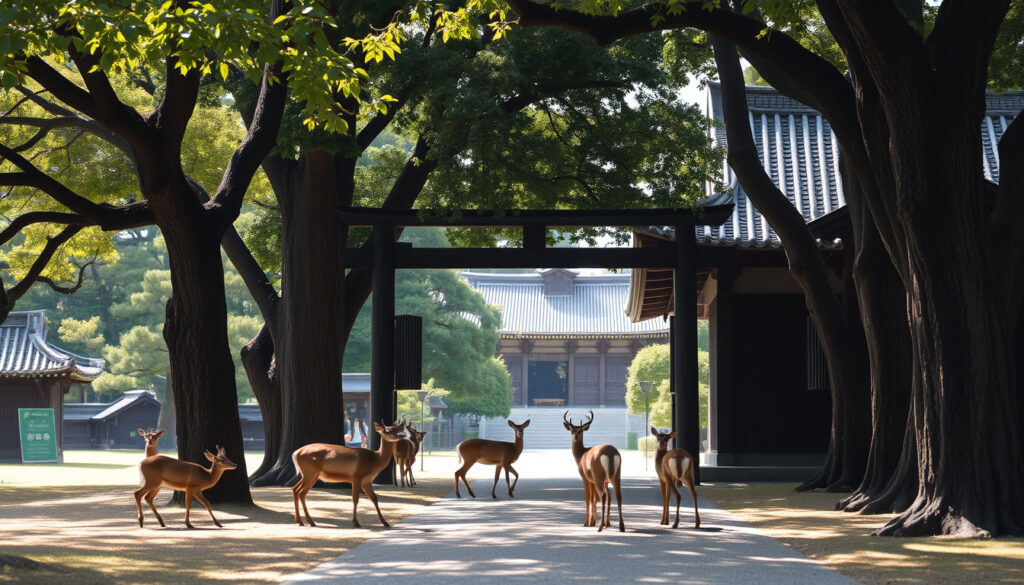
You’ve probably seen the photos: deer bowing politely, people surrounded by gentle creatures in a sprawling green park. But behind that serene image lies a set of practical questions that every traveler asks before visiting Nara Deer Park. This guide cuts through the noise with verified facts, real costs, and honest advice about timing, access, and the famously free-roaming deer.
Year Established: 1880 ·
Area: 660 hectares ·
Deer Population: Over 1,200 ·
Designation: UNESCO World Heritage site (Historic Monuments of Ancient Nara)
Quick snapshot
- Nara Park has no admission fee (Nara Prefectural Administrative Office)
- Deer crackers cost ¥150–200 per pack (Vacations & Travel)
- Park open 24/7, 365 days a year (Japan Rail Pass)
- Exact deer population fluctuates (commonly cited as 1,200–1,400) (Passport Nomads)
- Best time to avoid crowds varies by season and day of week (Passport Nomads)
- Whether the deer actually bow – some sources dispute trained behavior (Passport Nomads)
- Todaiji Temple admission fee is often reported as 800 yen, but may vary (Passport Nomads)
- 1880: Nara Park officially established (Official Nara Travel Guide)
- 1957: Deer designated as a National Monument (Official Nara Travel Guide)
- 1998: Historic Monuments of Ancient Nara inscribed as UNESCO World Heritage site (Official Nara Travel Guide)
- No reservation needed – arrive any day
- Peak cherry blossom season (late March–April) draws large crowds
- Deer rutting season in autumn means more cautious behavior
First-time visitors who arrive without deer crackers face pushy deer that quickly learn which tourists are empty-handed. The simplest solution: buy one pack of shika senbei (¥150–200) before you enter the deer-heavy zones from the Nara Prefectural Nara Park Administrative Office guidance.
The confirmed data on Nara Deer Park cuts through the confusion.
| Attribute | Value | Source |
|---|---|---|
| Location | Nara, Japan, at the foot of Mount Wakakusa | Official Nara Travel Guide |
| Established | 1880 | Official Nara Travel Guide |
| Area | 660 hectares | Official Nara Travel Guide |
| Deer count | Over 1,200 | Official Nara Travel Guide |
| Admission | Free (paid attractions inside) | Nara Prefectural Administrative Office |
| Hours | Park open 24/7; attractions vary | Japan Rail Pass |
| Official site | visitnara.jp | Official Nara Travel Guide |
Is Nara deer park free entry?
The short answer is yes — and the longer answer saves you money. Nara Park itself has no admission fee, and you can walk through its 660-hectare grounds entirely free of charge, as confirmed by the Nara Prefectural Nara Park Administrative Office (official park authority). The deer roam freely, and there’s no gate or ticket booth at the park entrance.
What is the entrance fee for Nara deer park?
- Nara Park entrance: free (Vacations & Travel (travel guide))
- Todaiji Temple Great Buddha Hall: 800 yen for adults (Passport Nomads (travel blog))
- Kasuga Taisha: free (inner area may charge ¥500–1,000)
- Nara National Museum: 1,200 yen (special exhibitions extra)
- Deer crackers (shika senbei): ¥150–200 per pack (Japan Rail Pass (travel guide))
How do I get tickets for Nara deer park?
You don’t need tickets for the park itself. For paid attractions like Todaiji Temple, tickets are sold at the gate — no advance booking required, as noted by Go Find Orient (travel resource). If you want a guided tour or a special experience like a tea ceremony inside the park, those may require prior reservation through platforms like Klook (booking platform).
The catch: temple admissions add cost, but the park itself remains free.
How long do you need at Nara deer park?
Most visitors spend 2–4 hours exploring the park and its main sights, according to Japan-Guide (comprehensive travel resource). The park is compact enough for a half-day trip, but you can easily stretch it to a full day if you visit every attraction.
What are the opening hours of Nara deer park?
- Park grounds: open 24/7, 365 days (Nara Prefectural Administrative Office (official park authority))
- Todaiji Temple: 7:30 am–5:30 pm (April–October), 8 am–4:30 pm (November–March) (Japan Rail Pass (travel guide))
- Kasuga Taisha: 6 am–6 pm (April–September), 6:30 am–5 pm (October–March)
- Nara National Museum: 9:30 am–5 pm (closed Mondays)
How much time is needed for Nara deer park?
Four hours gives you time to feed the deer near the entrance, walk to Todaiji Temple, see the Great Buddha, and visit Kasuga Taisha. If you add the Nara National Museum or Mount Wakakusa (especially during the January grass-burning festival), plan for 5–6 hours total. The Official Nara Travel Guide (tourism authority) suggests a half-day as sufficient for most travelers.
The implication: time-pressed travelers can hit highlights in two hours; those wanting immersion need twice that.
Is Nara deer park worth a visit?
Yes, with a clear caveat: it depends on what you want. If free-roaming deer, a UNESCO World Heritage temple complex, and a compact walkable park sound appealing, Nara delivers. The park is located at the foot of Mount Wakakusa and is designated a UNESCO World Heritage site as part of the Historic Monuments of Ancient Nara, recognized in 1998 (Official Nara Travel Guide (tourism authority)).
Is Nara Worth Visiting?
- Unique attraction: the deer are regarded as messengers of the gods in Shinto tradition (Official Nara Travel Guide (tourism authority))
- Compact size: easily combined with a day trip from Kyoto or Osaka
- Todaiji’s Great Buddha: one of Japan’s largest bronze statues, housed in the world’s largest wooden building
- Cultural depth: Kasuga Taisha, Nara National Museum, and traditional gardens
What is Nara deer park like in winter?
Winter brings fewer crowds but colder temperatures (average 3–10°C / 37–50°F in January). The deer are still present — they grow thick winter coats — and the park is less crowded. However, shika senbei sellers start later (around 9 am), and temple hours shorten. The Japan Rail Pass (travel guide) notes that winter visits are perfectly feasible, just colder.
What food is Nara famous for?
- Kakinoha-zushi: sushi wrapped in persimmon leaves, a Nara specialty
- Narazuke: vegetables pickled in sake lees, a traditional preservation method
- Yomogi mochi: rice cakes flavored with mugwort, often filled with red bean paste
- Miwa somen: thin wheat noodles from the Miwa region, served cold in summer or hot in winter
Skeptics sometimes criticize Nara as a “tourist trap with pushy deer.” The truth is closer to: the deer are wild, they know where the crackers come from, and they will nudge, nip, or follow persistent cracker-holders. The Nara Prefectural Administrative Office (official park authority) explicitly warns against teasing or startling the deer. Treat them with respect, and the experience is far from a trap.
Is Nara deer park closer to Kyoto or Osaka?
Nara is roughly equidistant from both cities, with a slight edge in convenience for Kyoto travelers. The journey from Kyoto to Nara takes 30–45 minutes, while from Osaka it’s 30–50 minutes — both easily manageable for a day trip (Japan Rail Pass (travel guide)).
Three base-city options, one clear pattern in access:
| Route | Time | Cost (one-way) | JR Pass Cover? | Convenience |
|---|---|---|---|---|
| Kyoto → Nara (Kintetsu) | 30–40 min | ¥1,100 | No (Kintetsu) | Stops at Kintetsu Nara Station, closest to park |
| Kyoto → Nara (JR) | 45 min | ¥710 | Yes | JR Nara Station, 20-min walk to park |
| Osaka → Nara (Kintetsu) | 30–40 min | ¥570–¥1,000 | No (Kintetsu) | From Namba or Tennoji stations |
| Osaka → Nara (JR) | 45–50 min | ¥780 | Yes | JR Yamatoji Line from Tennoji or Osaka Station |
| Tokyo → Nara (Shinkansen + local) | ~3.5 hours | ¥14,000 | Yes (full JR Pass) | Transfer at Kyoto or Shin-Osaka to local train |
How to get from Tokyo to Nara deer park?
Take the Tokaido Shinkansen from Tokyo to Kyoto (about 2 hours 15 minutes, ¥14,000), then transfer to a JR Nara Line local train (45 minutes, ¥710). The Japan Rail Pass (travel guide) notes this whole journey is covered by a full JR Pass — a significant saving if you plan multiple Shinkansen trips.
Is Nara Park in Osaka?
No — Nara Park is located in Nara City, in Nara Prefecture, not in Osaka Prefecture. It’s about 30 minutes by train from central Osaka, but it’s a separate city entirely. The Official Nara Travel Guide (tourism authority) confirms the park’s location at the foot of Mount Wakakusa in Nara City.
What this means: the park is equally accessible from Kyoto and Osaka, but Kyoto offers slightly faster direct trains.
Do you need to reserve Nara deer park?
No reservation is required to enter Nara Park. The park is first-come, first-served — show up any day, any time, and walk right in (Go Find Orient (travel resource)). This makes it one of the most spontaneous friendly attractions in the Kansai region.
How do I get tickets for Nara deer park?
- Park access: no ticket needed, ever (Nara Prefectural Administrative Office (official park authority))
- Todaiji Temple: tickets at the gate, 800 yen for adults (Passport Nomads (travel blog))
- Kasuga Taisha: free entry; inner precinct may require ¥500–1,000
- Guided tours: may require advance booking through tour operators
- Deer crackers: buy from vendors near the park entrance, ¥150–200 per pack
The reservation-free policy means you can add Nara to your itinerary at the last minute — ideal when Kyoto or Osaka plans shift. The only “sold out” risk involves temple entry during peak seasons (Golden Week, New Year), when Todaiji can have queues of 30–60 minutes.
Upsides
- Completely free park entry – no gatekeepers or hidden fees
- Deer interaction is unique and memorable
- Easy day trip from Kyoto or Osaka – no hotel needed
- UNESCO World Heritage status guarantees cultural value
- 24/7 park access means flexible timing
Downsides
- Deer can be pushy, especially with food – not ideal for very young children
- No trash bins in the park – you carry everything out (Nara Prefectural Administrative Office)
- Paid attractions inside add ¥800–1,200 per person
- Peak seasons bring heavy crowds near Todaiji and the deer zones
- Winter cold and shorter temple hours limit the full experience
The trade-off: spontaneity comes free, but peak‑season temple queues can test patience.
Steps for a smooth Nara Deer Park visit
- Choose your base – Kyoto (30–40 min via Kintetsu) is the most popular and convenient option (Japan Rail Pass (travel guide))
- Arrive early – Before 10 am to beat the main crowds, especially in cherry blossom season (late March–April)
- Buy deer crackers first – Vendors near the park entrance sell shika senbei for ¥150–200; buy a pack before you encounter the first deer cluster
- Feed the deer right – Hold the cracker flat in your palm, not between fingers; deer may nibble clothing if they smell food
- Visit Todaiji early – The Great Buddha Hall opens at 7:30 am (spring/summer) and gets crowded by 11 am (Japan Rail Pass (travel guide))
- See Kasuga Taisha – A 15-minute walk from Todaiji through the deer-filled forest path
- Take your trash – No bins exist in the park; backpacks should have a small bag for wrappers (Nara Prefectural Administrative Office (official park authority))
- Leave by 4 pm – Most temples close around 5 pm; the deer become less active in late afternoon
Following these steps turns a potentially frustrating visit into a smooth, memorable experience.
Summary
The real value of Nara Deer Park lies in its combination of free access, wild animal interaction, and genuine cultural heritage — all within a compact, walkable space. For travelers based in Kyoto or Osaka, the decision is simple: skip it only if you dislike deer or crowds. For Tokyo-based travelers, the 3.5-hour one-way journey means committing a full day, but the payoff — seeing free-roaming deer against a UNESCO World Heritage backdrop — holds up. The catch: you’ll share the experience with hundreds of other tourists in peak season, so arriving by 9 am is your best bet for a quieter deer encounter.
Frequently asked questions
Are the deer dangerous?
Not generally, but they are wild animals. The Nara Prefectural Administrative Office (official park authority) advises against teasing, chasing, or startling them. Deer can nip or push if they feel threatened or if they smell food on you. Supervise children closely during feeding.
Can I feed the deer with my own food?
No. Only shika senbei (deer crackers) are permitted. The Official Nara Travel Guide (tourism authority) warns that human food can harm the deer’s digestive system. Crackers are sold for ¥150–200 at stands throughout the park.
What is the best time of day to visit Nara deer park?
Early morning (8–9 am) before the tour buses arrive offers the quietest experience. The deer are also hungrier and more interactive in the morning. Late afternoon (3–4 pm) is also good for fewer crowds, though some temples close by 5 pm.
Is Nara deer park wheelchair accessible?
The park’s main paths are paved and mostly flat, making it wheelchair accessible. Todaiji Temple has a ramp to the Great Buddha Hall. The hillier areas near Kasuga Taisha and Mount Wakakusa are more challenging.
Are there restrooms and places to eat inside the park?
Yes. Public restrooms are located near the park entrance, Todaiji Temple, and Kasuga Taisha. Several restaurants and cafes operate near the park entrance and within the Naramachi district, serving traditional Nara cuisine like kakinoha-zushi and narazuke.
Can I see the deer in winter or early spring?
Yes. Deer remain in the park year-round. In winter they grow thicker coats and are still visible, though less active. Early spring (late February–March) brings mating season, so deer may be more skittish. The Japan Rail Pass (travel guide) confirms winter visits are feasible with proper clothing.
Is it possible to visit Nara deer park and Kyoto in one day?
Yes, but only if you skip major Kyoto temples. A common itinerary: morning in Nara (8 am–12 pm feeding deer, Todaiji, Kasuga Taisha), then train back to Kyoto (30–40 min) for a focused afternoon at one or two sights (e.g., Fushimi Inari or Kinkaku-ji). Budget around 4–5 hours for Nara, 3–4 hours for Kyoto.
Source: Flights to Tokyo – Cheapest US Deals and Booking Guide · USD to Yen – Live Rate, Chart & 2026 Forecast
More related posts
 Beef (TV Series) – Plot Cast Awards Ending Guide
 Stranded on Honeymoon Island – Couple Survives 40 Hours at Sea
 Kmart Laundry Hamper – Current Availability and Prices
 Madylin Sweeten: Life After Raymond, Baby and More
 Kelly Reilly Biography: Net Worth, Yellowstone Role & Facts
 Charles Sobhraj: Verified Facts, Release and Uncertainties
 Shane Warne: Cause of Death, Funeral, and Will Details
 Jaswinder Bhalla Death: Cause, Son, Daughters (2025)