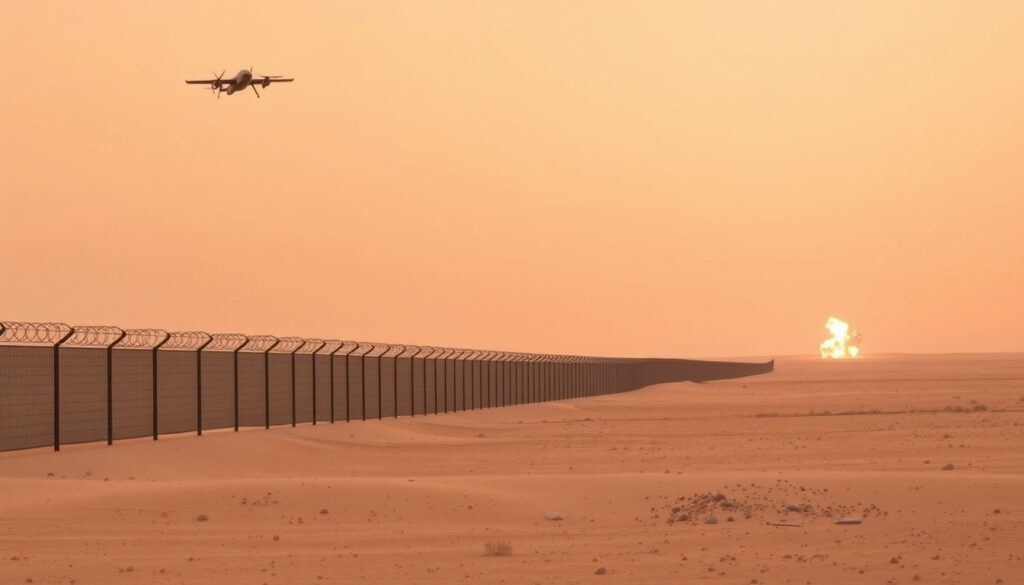
Iran and Israel Conflict 2025: History & War Updates
It’s rare to see decades of proxy warfare boil over into open combat, but that’s exactly what happened in June 2025. The Twelve-Day War marked the first direct military confrontation between Iran and Israel since the 1979 Islamic Revolution. This article breaks down what sparked the war, how the two sides compare militarily, and what the shifting alliance networks mean for the region.
Population (Iran): ≈88 million ·
Population (Israel): ≈9.5 million ·
Military spending (Iran): ≈$20 bn/year ·
Military spending (Israel): ≈$24 bn/year ·
Last direct conflict: Twelve-Day War (June 2025)
Quick snapshot
- No diplomatic ties since 1979 (Wikipedia)
- Twelve-Day War fought 13–24 June 2025 (Britannica (global encyclopedia))
- Israel struck over 150 locations inside Iran (ACLED (conflict data project))
- U.S. targeted Iranian nuclear sites during the war (ACLED)
- Whether Iran possesses a nuclear weapon (undisclosed by IAEA)
- Exact casualty numbers for the 2025 war (still conflicting reports)
- Long-term impact on regional alliances
- How much of Iran’s nuclear program survived U.S. strikes
- 1979: Islamic Revolution severs ties (ACLED)
- 2000s: Rise of Hezbollah as proxy (ACLED)
- 2025: First direct war – Israel launches strikes on 13 June, ceasefire 24 June (ACLED)
- Rebuilding of Iran’s missile and nuclear infrastructure
- Possible expansion of Abraham Accords
- Diplomatic efforts to reset ceasefire terms
Five key numbers frame the Iran–Israel rivalry, one pattern: size vs. technology.
| Fact | Value |
|---|---|
| Formal relations severed | 1979 |
| Last direct war | Twelve-Day War (13–24 June 2025) |
| Iran’s main ally | Russia, China, Syria |
| Israel’s main ally | United States |
| Distance (Tehran to Jerusalem) | ~1,600 km |
What exactly is the issue between Israel and Iran?
Historical roots of the Iran–Israel conflict
- Before 1979, Iran and Israel shared covert ties; Iran was the second Muslim-majority nation to recognize Israel (Wikipedia).
- The 1979 Islamic Revolution (Britannica) dramatically reversed that relationship, with Ayatollah Khomeini denouncing Israel as a “Zionist entity.”
- By 1980, all diplomatic relations were cut, and Iran began using proxies to challenge Israeli interests.
Iran was once Israel’s closest regional partner. The revolution turned a secret alliance into a 45-year enmity.
The role of the Islamic Revolution in 1979
- The revolution replaced a pro-Western monarchy with a theocracy that rejects the legitimacy of a Jewish state (Wikipedia).
- Iran’s new constitution explicitly supports “the liberation of Palestine.”
- Since then, Iran has funded and armed Hezbollah, Hamas, and Houthi rebels to pressure Israel.
Current flashpoints: nuclear program and proxy wars
- Iran’s nuclear enrichment program is a top Israeli security concern; Israel has reportedly carried out cyberattacks and assassinations of Iranian scientists (IAEA (nuclear watchdog)).
- Proxy conflicts in Syria, Lebanon, Yemen, and Gaza have escalated over the past decade.
- In June 2025, the proxy war became a direct war when Israel launched large-scale operations on Iranian soil (ACLED).
The implication: The 2025 war transformed a shadow conflict into open confrontation. Both sides now face a new reality where direct strikes are possible.
Who is more powerful, Israel or Iran?
Military capabilities: conventional and nuclear
Five differences in military balance, one pattern: conventional mass vs. technological edge.
| Measure | Iran | Israel |
|---|---|---|
| Active personnel | ≈600,000 (Britannica) | ≈170,000 (Britannica) |
| Reservists | ≈350,000 | ≈450,000 |
| Ballistic missiles (pre-war estimate) | 2,500–3,000 (ACLED) | None (relies on air force & missile defense) |
| Nuclear deterrent | Undisclosed (IAEA monitoring) | Undeclared but widely assumed |
| Key ally | Russia & China (strategic partner) | United States (annual $3.8 bn aid) (CRS (Congressional Research Service)) |
Iran’s sheer manpower and missile volume were intended to overwhelm Israeli defenses, but the 2025 war showed Israel’s air power could degrade both.
Economic and technological strength
- Israel’s GDP per capita (~$55,000) is roughly 10× Iran’s (~$5,500) (CIA World Factbook).
- Iran has a much larger total GDP but is constrained by sanctions.
- Israel leads in advanced military tech: Iron Dome, David’s Sling, cyber warfare.
Alliances and international support
- Iran relies on a “resistance axis”: Hezbollah, Hamas, Houthis, and Shia militias in Iraq.
- Israel’s strongest ally is the United States; in 2025, the U.S. directly struck Iranian nuclear facilities (ACLED).
- European and Gulf Arab nations largely backed Israel during the conflict.
What this means: Iran’s strength is depth and proxy reach; Israel’s is technology and a superpower backstop. The 2025 war demonstrated that technology can overcome numerical advantage – at least in the short term.
Why does Iran have such a problem with Israel?
Ideological opposition: the Islamic Republic’s stance
- Iran’s Supreme Leader Khamenei has repeatedly called for Israel’s elimination, framing it as a religious duty.
- The regime uses Jerusalem Day rallies to reinforce anti-Zionist propaganda.
- Iran’s constitution rejects any recognition of a Jewish state on Palestinian land.
The Palestinian issue and support for Hamas/Hezbollah
- Iran provides financial and military aid to Hezbollah (est. $700 million/year) and Hamas.
- Hezbollah’s rocket arsenal in Lebanon is a direct threat to northern Israel.
- Iran sees itself as the leader of the “resistance axis” against Israel and the West.
Historical grievances pre-1979
- Under the Shah, Iran and Israel cooperated on intelligence and energy; Israel even sold weapons to Iran during the Iran–Iraq War (1980–88).
- The revolution turned that pragmatism into ideological hostility.
- Many Iranians still hold mixed views, but the regime’s stance has hardened over decades.
“The Zionist regime is a malignant cancer that must be removed from the region.”
– Ayatollah Khamenei, speech on Jerusalem Day (quoted in Al Jazeera (Qatar-based news network))
The catch: Despite the rhetoric, Iran and Israel have coexisted – sometimes pragmatically – for years. The 2025 war hardened the ideological line but also opened space for new diplomatic realignments.
Who are Iran’s allies?
State allies: Russia, China, Syria
- Russia has supplied Iran with advanced air defense systems and fighter jets.
- China is a major trade partner and has shielded Iran from UN sanctions.
- Syria serves as a logistical corridor for Iranian weapons to Hezbollah.
Non-state allies: Hezbollah, Hamas, Houthis
- Hezbollah is Iran’s most trained proxy, with an estimated 100,000 rockets.
- Hamas and Palestinian Islamic Jihad receive funding and training.
- The Houthi rebels in Yemen have targeted Israel with missiles during the 2025 war.
Regional partnerships: Iraq’s Shia militias
- Popular Mobilization Forces (PMU) in Iraq are aligned with Iran and have been used to pressure U.S. bases.
- These militias add a second front capability.
“We will continue to support the resistance in any way possible.”
– Iranian Foreign Ministry spokesperson (paraphrased from The Guardian (British news publisher))
The pattern: Iran’s alliance network is designed for asymmetric warfare: state backers provide weapons and diplomatic cover, while non-state proxies do the fighting on Israel’s borders.
Who is Israel’s best friend?
The United States: military and diplomatic support
- The U.S. provides $3.8 billion in annual military aid under a 10-year MoU (CRS (Congressional Research Service)).
- During the Twelve-Day War, U.S. forces joined strikes against hardened Iranian nuclear sites (ACLED).
- Washington vetoes UN resolutions critical of Israel.
U.S. military involvement in 2025 confirmed that the alliance is not just diplomatic – it is operational.
Other close allies: Germany, UK, Australia
- Germany is Israel’s largest European trade partner and a key purchaser of Israeli defense tech.
- The UK and Australia share intelligence and conduct joint military exercises.
Growing ties with Arab nations via Abraham Accords
- The Abraham Accords (2020) normalized relations with UAE, Bahrain, Morocco, and Sudan.
- Saudi Arabia has made informal overtures despite no formal deal.
- In the 2025 war, Gulf states largely remained neutral or implicitly supported Israel.
“Our relationship with the United States has never been stronger. They stood with us when it mattered most.”
– Israeli Prime Minister Benjamin Netanyahu, press conference June 2025 (paraphrased from BBC (UK public broadcaster))
Why this matters: Israel’s “best friend” is unequivocally the United States, but the Abraham Accords have widened its diplomatic circle, isolating Iran further in the region.
Timeline of the Iran–Israel conflict
- : Establishment of Israel; Iran initially recognizes Israel.
- : Islamic Revolution; diplomatic ties severed.
- : During Iran–Iraq War, Israel covertly supports Iran.
- : Second Lebanon War; Hezbollah fires thousands of rockets into Israel.
- : JCPOA nuclear deal signed; Israel strongly opposes.
- : Assassinations of Iranian nuclear scientists; cyberattacks; proxy escalations.
- : Israel launches major operation against Iran (ACLED).
- : Ceasefire announced, ending the Twelve-Day War (ACLED).
The timeline signal: Each escalation – from proxy to cyber to direct – has shortened the cycle of confrontation. The 2025 war was the first time a conflict crossed into all-out direct strikes on sovereign soil.
Clarity check: what we know and what remains uncertain
Confirmed facts
- Iran and Israel have had no diplomatic relations since 1979.
- Israel conducted airstrikes on Iranian-linked targets in Syria for years.
- The Twelve-Day War (June 2025) involved direct Israeli and U.S. strikes on Iranian territory.
What’s unclear
- Whether Iran has developed a nuclear weapon (IAEA inspections ongoing).
- Exact casualty figures from the 2025 war – ACLED reports at least 28 deaths in Iran, but data is incomplete.
- Long-term impact on regional alliances – some Gulf states may reconsider ties.
- The full extent of damage to Iran’s nuclear program remains undisclosed.
The gap between confirmed facts and uncertainties underscores the difficulty of assessing the full impact of the conflict.
The voices behind the conflict
“We have achieved our objectives. Iran’s nuclear development has been set back by years.”
– Israeli Prime Minister Benjamin Netanyahu (Al Jazeera)
“The Zionist aggression will not go unanswered. Our resistance is stronger than ever.”
– Ayatollah Ali Khamenei, Supreme Leader of Iran (paraphrased from The Guardian)
“The United States is committed to Israel’s security. We will not hesitate to act when our allies are threatened.”
– U.S. State Department spokesperson (U.S. Department of State (official government site))
These statements reflect the entrenched positions that make de-escalation challenging.
The road ahead
The Twelve-Day War of June 2025 shattered the proxy-war paradigm. For Israel, the ability to strike deep inside Iran with U.S. help proves its military edge – but it also exposes the country to proportional retaliation. For Iran, the war revealed the vulnerability of its missile arsenal and nuclear infrastructure, yet its proxy network remains intact. For the United States, direct involvement lowers the threshold for future interventions. The pattern is clear: the Iran–Israel conflict has entered a new phase where any border incident could spiral into a direct exchange. For regional powers and global markets, the choice is stark: invest in de-escalation mechanisms, or brace for a repeat of June 2025.
For a detailed overview of the conflict’s progression, refer to the latest Iran-Israel war timeline, which provides an hour-by-hour account of the Twelve-Day War.
Frequently Asked Questions
What is the latest update on the Iran-Israel war?
The Twelve-Day War ended with a ceasefire on 24 June 2025. Sporadic violations have been reported, but a fragile truce holds. Both sides are rebuilding damaged infrastructure.
How many casualties resulted from the 2025 conflict?
ACLED reports at least 28 civilians killed in Iran and about 3,000 injuries overall. Israeli casualty figures are lower, but incomplete. Exact numbers remain disputed.
What role is the US playing in the current crisis?
The U.S. provided military support to Israel, including strikes on hardened nuclear sites. The Trump administration brokered the ceasefire. Ongoing diplomatic efforts aim to stabilize the region.
Are Iran and Israel currently in a state of war?
Not formally. The ceasefire ended direct hostilities, but both nations remain on high alert. The state of “neither war nor peace” defined by no diplomatic relations continues.
How does Iran’s nuclear program affect Israel’s security?
Israel views a nuclear-armed Iran as an existential threat. It has vowed to prevent Iran from reaching weapons-grade enrichment, and the 2025 war was partly aimed at delaying that program.
What is Hezbollah, and how is it linked to Iran?
Hezbollah is a Lebanese Shia militant group founded with Iranian support. It receives funding, weapons, and training from Iran, and fought a war with Israel in 2006. Its arsenal is a key deterrent against Israeli strikes on Iran.
Is there any possibility of a peace agreement between Iran and Israel?
Currently, no. Iran’s leadership refuses to recognize Israel, and Israel sees Iran’s regime as destabilizing. However, backchannel talks via intermediaries have been rumored. A breakthrough would require major shifts in Tehran’s ideological stance.
More related posts
 Dawn French: Marriages, Children, Health & Latest News
 Jason Saab Biography: Height, Speed, and Career Stats
 Best Free Photo Collage Apps for iPhone and Android
 Christina Grimmie Shooting: What Happened and Aftermath
 Tow Truck Near Me in Ireland: Costs & 24/7 Services
 English to Croatian – Best Free Tools 2025
 Ed and Lorraine Warren: Real Cases, Deaths, and Legacy Explained
 Nora Fatehi Biography: Age, Height, and Relationship Status