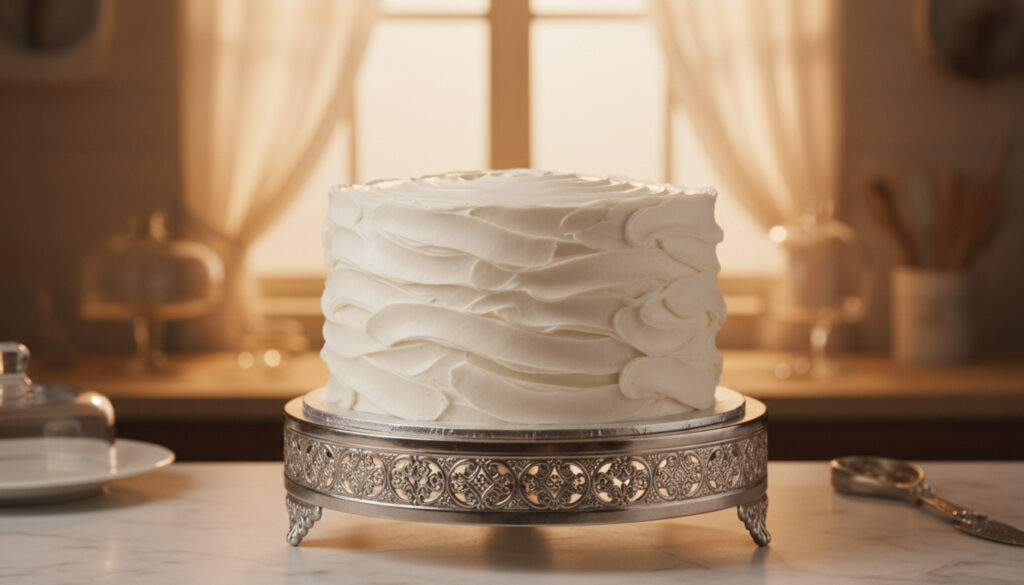
Butter Cream Icing – Guide to Smooth Stable Frosting
Buttercream icing serves as the foundation of cake decorating, combining simple ingredients into a versatile finish that ranges from rustic spreads to intricate piping. Mastering this essential confection requires understanding the balance between fat and sugar, alongside proper mechanical techniques that transform basic components into silky, stable frosting suitable for celebrations and everyday baking alike.
Professional bakers emphasize that success hinges on temperature control and timing rather than complex ingredients. Whether preparing traditional American buttercream or exploring egg-white-based alternatives, the fundamental chemistry remains consistent: creating a stable emulsion that holds its shape while melting smoothly on the palate.
How Do You Make Buttercream Icing?
Creating buttercream icing involves combining fat and sugar through mechanical action to incorporate air and create volume. The specific method varies by style, though most approaches rely on beating butter until light and fluffy before gradually introducing sweeteners and liquids.
Butter whipped with powdered sugar creates the traditional base most home bakers recognize.
Egg whites and sugar cooked together then whipped with butter yield a silkier, less sweet result.
Pasteurized egg whites combined with powdered sugar offer a middle ground between stability and sweetness.
Granulated sugar dissolved into liquid creates alternative sweetening without powdered sugar grit.
- Unsalted butter is essential for controlling final flavor profile and avoiding over-salting.
- Room temperature ingredients incorporate more smoothly than cold components.
- Thirteen to fifteen minutes of creaming time ensures proper aeration when using granulated sugar.
- Stiff peaks indicate readiness for piping and decorating applications.
- Stand mixers reduce preparation time by half compared to hand mixers.
- Liquid flexibility allows substitution between cream, milk, or water based on availability.
- Cornstarch in powdered sugar eliminates the need for sifting in most U.S. brands.
| Component | Specification |
|---|---|
| Primary Fat | Unsalted butter, room temperature |
| Sweetener Options | Powdered sugar, granulated sugar, or sugar syrup |
| Mixing Duration | 13-15 minutes (hand mixer: double time) |
| Aeration Indicator | Stiff peaks formation |
| Texture Goal | Pale, fluffy, and light consistency |
| Equipment | Stand mixer with paddle attachment preferred |
How Do You Make Buttercream Icing Smooth?
Achieving silky texture requires addressing temperature, air incorporation, and ingredient ratios. Problems typically emerge from environmental factors or mixing technique rather than recipe failures.
Adjusting Consistency
When frosting spreads too thin, incorporate powdered sugar two tablespoons at a time until structural integrity improves. Conversely, overly thick mixtures respond to heavy whipping cream added one tablespoon at a time. For Not Too Sweet Buttercream Frosting, maintaining the emulsion proves critical when adjusting sweetness levels.
Eliminating Texture Problems
Graininess often stems from undissolved sugar crystals or improper creaming. When mixtures become excessively airy, folding by hand with a silicone spatula releases trapped bubbles. Dense textures require high-speed mixing for approximately one minute to introduce necessary air pockets.
Refrigerating liquidy frosting for five to ten minutes firms the butter content sufficiently for spreading or piping. This temporary cooling hardens the fat structure without compromising long-term stability.
What Is the Difference Between Buttercream and Frosting?
While often used interchangeably in casual conversation, technical distinctions separate broad frosting categories from specific buttercream preparations. Understanding these boundaries helps bakers select appropriate coverings for specific applications.
American Buttercream Characteristics
This variation represents the simplest form, combining butter with powdered sugar to create a sweet, sturdy coating. American buttercream crusts slightly when exposed to air, making it ideal for smooth finishes achieved through scraping techniques.
Advanced Variations
Swiss meringue buttercream introduces cooked egg whites, creating a more stable foam structure that withstands warmer temperatures than American styles. Italian and French variations similarly rely on egg components, distinguishing them from simple butter-sugar mixtures. Cream cheese frostings, while technically separate from traditional buttercream, often substitute half the butter content and require additional powdered sugar for stabilization.
Can You Make Buttercream Icing Without Powdered Sugar?
Alternatives to powdered sugar exist for bakers seeking different sweetness levels or textures. These methods require modified techniques to ensure proper dissolving and incorporation.
This style naturally excludes powdered sugar, instead dissolving granulated sugar into egg whites before cooking and whipping. The result offers superior stability and reduced sweetness compared to American preparations.
For traditional buttercream without powdered sugar, cream butter thoroughly for thirteen to fifteen minutes until pale and creamy. Gradually introduce a cooled mixture of granulated or caster sugar combined with cream, milk, or water at low speed. Increase mixing speed until the mixture achieves stiff peaks.
When increasing sweetness in syrup-based buttercream, add powdered sugar rather than additional liquid sweetener to maintain emulsion integrity. Liquid additions alter the fat-to-moisture ratio and may cause separation.
American Dreamy Buttercream
This innovative approach utilizes sugar syrup rather than crystalline sweeteners, creating a texture that melts without graininess. American Dreamy Buttercream has been tested with seven different syrup variations, proving versatile for various flavor profiles.
What Is the Preparation Process for Buttercream Icing?
Successful execution follows a strict chronological sequence emphasizing temperature control and gradual incorporation. Rushing any stage risks graininess or emulsion breakdown.
- Butter Preparation: Allow unsalted butter to reach room temperature. This typically requires thirty to sixty minutes depending on ambient conditions.
- Initial Creaming: Beat butter using an electric mixer or stand mixer with paddle attachment for thirteen to fifteen minutes until notably pale and fluffy.
- Liquid Cooling: Prepare sugar and cream mixture, then cool completely before introduction to prevent melting the butter matrix.
- Gradual Addition: Incorporate liquid components at low speed to prevent splashing and ensure even distribution.
- Final Aeration: Increase to medium speed for five additional minutes, or until the mixture displays stiff peaks capable of holding shape when piped.
- Quality Verification: Test consistency by spreading a small amount; if too soft, refrigerate for five to ten minutes before use.
What Science Underpins Buttercream Stability?
Current baking literature establishes certain chemical principles while leaving practical storage questions unresolved.
| Established Principles | Uncertain Aspects |
|---|---|
| Buttercream functions as an emulsion combining fat (butter) with water-based liquids | Specific shelf life durations at various temperatures |
| Swiss meringue provides greater structural stability than American styles | Temperature stability differences between variations |
| Cornstarch in commercial powdered sugar prevents caking without requiring sifting | Long-term storage recommendations for egg-white-based varieties |
| Refrigeration temporarily firms butter content for improved workability | Optimal freezing protocols and thawing procedures |
| Stiff peaks indicate sufficient aeration for decorative applications | Maximum safe holding times at room temperature |
The Evolution of Buttercream Styles
Contemporary buttercream categories emerged from practical adaptations to ingredient availability and climate challenges. American buttercream developed as a straightforward preparation requiring no cooking, suited to home kitchens with limited equipment. European variations incorporating meringue bases evolved in professional settings where stability during extended display periods proved essential.
Recent innovations blend these traditions, with hybrid styles incorporating pasteurized egg products into American-style convenience. Alternative sweetening methods using caster sugar or syrups address textural preferences while maintaining the essential fat-sugar emulsion that defines the category.
Professional Insights on Buttercream Techniques
Beat butter thoroughly using an electric mixer or stand mixer with paddle attachment until pale and creamy. For hybrid buttercream, mix room temperature butter one stick at a time on low speed, then increase to medium speed for five additional minutes until fluffy and smooth.
— ChelCakes
Use cream, double cream, heavy cream, half and half, milk, or water depending on availability. The liquid-to-sugar ratio affects consistency and must be carefully balanced in emulsion-based frostings.
— Sugarologie
If you’re using powdered sugar, most U.S. brands contain cornstarch to prevent caking, so sifting is unnecessary unless you notice clumps.
— Professional Baking Resources
Key Takeaways for Perfect Buttercream
Perfect buttercream requires attention to ingredient temperature, adequate creaming time, and appropriate adjustments for consistency. Whether preparing Perfect American Buttercream Frosting or exploring syrup-based alternatives, success depends on respecting the emulsion chemistry that binds fat and sugar into a stable, spreadable medium.
Frequently Asked Questions
Is buttercream icing the same as frosting?
Buttercream represents a specific category of frosting characterized by butter as the primary fat. Not all frostings qualify as buttercream; cream cheese frosting and ganache follow different formulation principles.
Why is my buttercream icing grainy?
Graininess typically results from undissolved sugar crystals or insufficient creaming time. Ensure butter reaches room temperature and beat thoroughly for 13-15 minutes before adding sweeteners.
Can buttercream icing be frozen?
Specific freezing protocols remain unverified in available research. Standard practice suggests freezing affects emulsion stability, though egg-white-based varieties may respond differently than American buttercream.
How much butter should I use for buttercream icing?
Standard ratios typically use one pound of butter as a base, yielding approximately four cups of finished frosting. Adjust liquid and sugar proportions relative to this fat quantity.
What type of butter is best for buttercream?
Unsalted butter provides optimal control over final salt content. Salt levels vary between brands, making unsalted varieties preferable for consistent results.
Can I use a hand mixer instead of a stand mixer?
Hand mixers function adequately but require approximately twice the mixing time. For Swiss meringue or hybrid varieties, stand mixers prove significantly more effective.
How do I fix buttercream that is too sweet?
Reduce sweetness by increasing butter content slightly or adding a pinch of salt to balance flavors. Avoid adding liquid ingredients, which compromise consistency.
More related posts
 Shirley Henderson: Age, Moaning Myrtle Role & Career
 Troy Mercanti: Coffin Cheaters Leader Guilty in 2026 Brawl
 Jeffrey Epstein: Verified Facts, Sources, Unanswered Questions
 TL to AUD – Current Exchange Rate, Charts and Forecast
 Food Near Me Open Now: Ireland Delivery & Takeaway Guide
 Nicki Nicole: Relationship with Lamine Yamal, Age, Career & Facts
 Japanese Curry Recipe: Easy Chicken with Golden Roux
 Chemi t Warehou e Caboolture – Hour , Phone & Addre