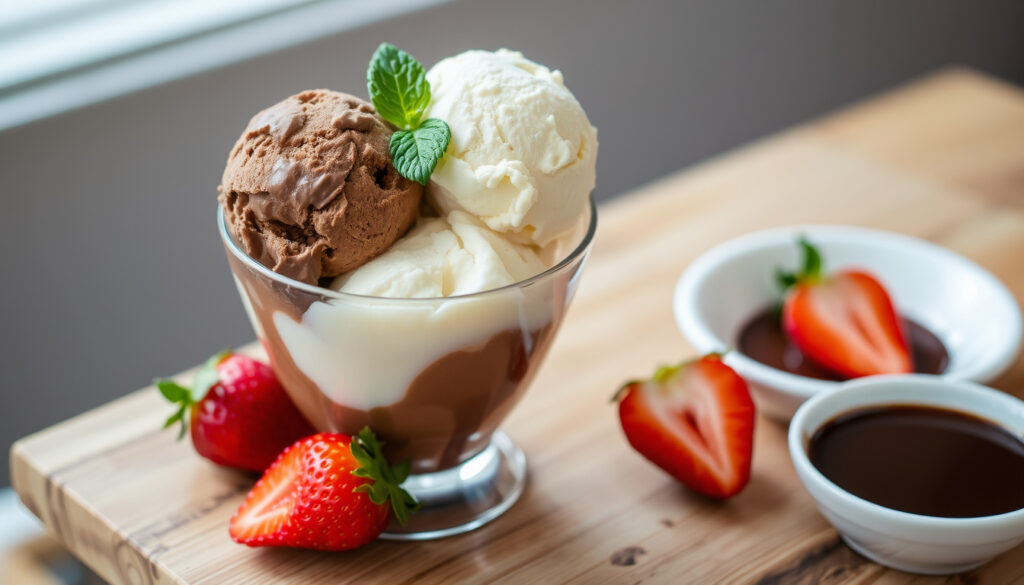
Neapolitan Ice Cream: Origin, Flavors, and Health Facts
You’ve seen the pink, white, and brown block in the freezer aisle—three flavors in one carton, promising something for everyone. But Neapolitan ice cream’s tidy stripes hide a surprisingly tangled history, one that stretches from Prussian royal kitchens to Italian immigrant pushcarts and American marketing boards. This isn’t just a nostalgic novelty; it’s a case study in how a dessert’s identity can shift across continents.
Flavors: Vanilla, Chocolate, Strawberry · Also called: Harlequin ice cream · Origin: Named after Naples, Italy · First recorded: 19th century
Quick snapshot
- Named after Naples, Italy. (Wikipedia – encyclopedia entry)
- First appeared in the 19th century. (Kiddle – children’s encyclopedia)
- Popularized in the United States. (Giadzy – food publisher)
- Classic three: vanilla, chocolate, strawberry. (Ice Cream Trucks Canada – industry blog)
- Arranged in side‑by‑side stripes. (Australian Food History Timeline – academic research)
- Also called Harlequin ice cream. (The Food Timeline – culinary history research)
- Moderate calories compared to heavy mix‑in flavors. (The Food Timeline)
- May contain added sugars and stabilizers. (The Food Timeline) (The Food Timeline)
- Not reliably the unhealthiest ice cream. (Ice Cream Trucks Canada) (The Food Timeline)
- Available in most grocery stores. (Wikipedia)
- Pre‑packed blocks or sandwich wafers. (Wikipedia)
- Also sold as novelty ice cream bars. (Wikipedia)
Five key facts, one pattern: the dessert’s definition has remained remarkably stable while its origin story keeps shifting across sources.
| Also known as | Harlequin ice cream |
|---|---|
| Flavors | Vanilla, Chocolate, Strawberry |
| Origin | Naples, Italy |
| First documented | 19th century |
| Typical packaging | Three‑stripe block |
| Earliest known recipe | Attributed to Louis Ferdinand Jungius (1839) |
| Alternative early color scheme | Green, white, red (Italian flag colors) |
| Confirmed in Australia by | 1894 |
Why do they call Neapolitan ice cream?
Connection to Naples, Italy
- The dessert takes its name from Naples, Italy, even though the actual connection to Neapolitan cuisine is thin. (Wikipedia – encyclopedia entry)
- Italian vendors in the 19th century helped popularize portable ice cream in the U.S., and the “Neapolitan” label carried a fashionable European cachet. (Giadzy – food publisher)
18th and 19th century culinary trends
- Frozen desserts made with fruit and cream were already well developed in Italy by the 17th century, as recorded by Antonio Latini. (Giadzy)
- The earliest documented three‑flavor recipe comes from Prussia in 1839, not Italy. (Kiddle – children’s encyclopedia)
Harlequin ice cream as an alternative name
- The striped appearance reminded some of Harlequin’s multicolored costume, giving rise to the nickname “Harlequin ice cream.” (Australian Food History Timeline – academic research)
- The term was used in English‑language sources by the late 1800s. (Australian Food History Timeline)
The implication: the name is a borrowed prestige, not a geographical indicator.
The name “Neapolitan” is a marketing label, not a geographic indication. The dessert’s actual birthplace is Prussia, and its standardized tri‑color form is an American adaptation.
What is Neapolitan ice cream flavor?
Standard three flavors: vanilla, chocolate, strawberry
- Today, Neapolitan ice cream almost always consists of vanilla, chocolate, and strawberry arranged side by side. (Ice Cream Trucks Canada – industry blog)
- Early versions sometimes used green (pistachio), white (vanilla), and red (cherry) to evoke the Italian flag. (The Food Timeline)
Why these three flavors were chosen
- Chocolate, vanilla, and strawberry were the most popular ice cream flavors in the United States when the dessert became widespread. (Wikipedia – encyclopedia entry)
- The combination offered a practical solution: one package that could please three different preferences. (Ice Cream Trucks Canada – industry blog)
Modern variations and regional differences
- Some 19th‑century recipes used more than three flavors—up to five layers. (Giadzy – food publisher)
- In Australia, Neapolitan bricks were made by layering cream flavors in molds, with early recipes describing a simple thick custard. (Australian Food History Timeline – academic research)
The pattern: the modern trio is an American convenience, not an Italian tradition.
What is the Italian version of Neapolitan ice cream?
Spumoni and other Italian frozen desserts
- Italy’s three‑flavor frozen dessert is spumoni, which typically includes fruit, nuts, and a chocolate layer. (Wikipedia – Spumoni entry)
- Spumoni is molded differently and has a denser texture than commercial Neapolitan. (Wikipedia – Spumoni entry)
Gelato differences
- “Gelato alla napoletana” in Italy refers to a hazelnut‑flavored gelato, not a tri‑color block. (Giadzy – food publisher)
- Italian gelato uses less fat and more sugar than U.S. ice cream, and flavors are usually sold separately. (Wikipedia – Gelato)
Actual Neapolitan ice cream in Italy
- Tourists in Naples might be surprised: the three‑stripe Neapolitan brick is largely unknown in Italy. (Giadzy – food publisher)
- What Americans call Neapolitan is a product of Italian immigrant vendors adapting to U.S. palates in the late 19th century. (Giadzy – food publisher)
The catch: the iconic stripe block is a foreign invention, not a local specialty.
For anyone traveling to Naples with hopes of tasting the original, the real discovery is that “Neapolitan ice cream” as a striped block is a foreign invention, not a local specialty.
What’s so special about Neapolitan ice cream?
Visual appeal of three distinct stripes
- The pink, white, and brown block is instantly recognizable and often associated with nostalgic parties and ice cream sandwiches. (Wikipedia – encyclopedia entry)
- Its presentation makes it a popular choice for photos and retro branding. (Ice Cream Trucks Canada – industry blog)
Convenience of three flavors in one package
- One carton can satisfy multiple cravings, reducing the need to buy separate tubs. (Ice Cream Trucks Canada – industry blog)
- It’s a common feature in hotel breakfast buffets and party platters. (Wikipedia – encyclopedia entry)
Cultural nostalgia and marketing history
- By the early 20th century, Neapolitan was a staple in American ice cream marketing, often sold in cardboard bricks. (Wikipedia – encyclopedia entry)
- Its Harlequin nickname reflects the playful, circus‑themed advertising of the era. (Australian Food History Timeline – academic research)
The interpretation: its real value is branding, not flavor innovation.
What’s the unhealthiest ice cream flavor?
Nutritional profile of Neapolitan compared to other flavors
- Neapolitan’s calorie count is moderate compared to mix‑in‑heavy flavors like cookie dough or brownie fudge. (The Food Timeline)
- A typical half‑cup serving of Neapolitan contains 140–160 calories, similar to plain vanilla or chocolate. (The Food Timeline)
Sugar and fat content in commercial brands
- Some budget brands add extra sugar and stabilizers to improve texture, pushing sugar content above 20 grams per serving. (The Food Timeline)
- Premium Neapolitan brands may use higher fat cream, but the per‑serving fat difference is small. (The Food Timeline)
Portion size and dietary considerations
- The unhealthiest ice cream isn’t about flavor but about portion control and added mix‑ins. (The Food Timeline)
- Neapolitan offers the illusion of variety—three flavors in one bowl—which can lead to larger portions. (The Food Timeline)
What this means: the triple‑flavor presentation encourages over‑serving.
Neapolitan itself isn’t the worst offender, but for portion‑sensitive eaters, the triple‑flavor presentation makes it easy to over‑serve. The real danger is the serving size, not the stripe.
Confirmed facts vs. what remains unclear
Confirmed facts
- Neapolitan ice cream is named after Naples, Italy. (Wikipedia – encyclopedia entry)
- Standard flavors are vanilla, chocolate, and strawberry. (Wikipedia – encyclopedia entry)
- It is also referred to as Harlequin ice cream. (Wikipedia – encyclopedia entry)
- The first known three‑flavor recipe dates to 1839 in Prussia. (Kiddle – children’s encyclopedia)
- Early color schemes sometimes used green, white, red (Italian flag). (Wikipedia – encyclopedia entry)
What’s unclear
- Exact year of first creation (various claims from 1830s to 1890s). (Wikipedia – encyclopedia entry)
- Whether the original flavors included pistachio instead of strawberry. (Ice Cream Trucks Canada – industry blog)
- The precise reason vanilla was chosen as one of the three (likely popularity, but not documented). (Wikipedia – encyclopedia entry)
- Who first commercialized the tri‑color block in the United States. (The Food Timeline – culinary history research)
- The earliest use of the term ‘Neapolitan ice cream’ in English-language sources is not precisely dated. (Australian Food History Timeline – academic research)
What the sources say
“Neapolitan ice cream is three layers of different color and flavor, molded into a block and cut into slices.”
— Larousse Gastronomique, as quoted by the Australian Food History Timeline (culinary reference)
“The history of ice cream is usually traced to ancient flavored ices; modern ice cream developed in Italy during the 17th century.”
— The Food Timeline (food history research project)
The evidence points to one conclusion: Neapolitan ice cream is a marketing success story that borrowed a prestigious name and adapted to American tastes. For the average shopper, the choice is clear: enjoy the convenience of three flavors, but know that the “authentic Italian” label is more fiction than fact. For educators, it’s a prime example of how culinary history gets rewritten for commerce.
For those curious about how this tricolor block came to be, Neapolitan ice creams history offers deeper insight into its origin and nutritional profile.
Frequently asked questions
How many calories are in a serving of Neapolitan ice cream?
A typical half‑cup serving of commercial Neapolitan contains 140–160 calories, similar to plain vanilla or chocolate. (The Food Timeline)
Is Neapolitan ice cream gluten‑free?
Most plain Neapolitan ice creams are gluten‑free, but always check labels for added cookies, wafers, or stabilizers that may contain gluten. (Wikipedia – encyclopedia entry)
Can I make Neapolitan ice cream at home?
Yes. You can prepare three separate ice cream bases (vanilla, chocolate, strawberry), layer them in a loaf pan, and freeze. (Australian Food History Timeline – academic research)
What is the difference between Neapolitan and spumoni?
Spumoni is an Italian frozen dessert that layers fruit, nut, and chocolate flavors, often with a denser texture. Neapolitan is a lighter, cream‑based ice cream with three distinct stripes. (Wikipedia – Spumoni entry)
Does Neapolitan ice cream contain real strawberries?
Many commercial brands use strawberry flavoring and color rather than real fruit. Premium brands may include real strawberry puree. (Wikipedia – encyclopedia entry)
Why is Neapolitan ice cream sometimes called Harlequin?
The striped appearance reminded people of Harlequin’s multicolored costume from commedia dell’arte. The nickname was used in English sources by the late 19th century. (Wikipedia – encyclopedia entry)
Is Neapolitan ice cream available dairy‑free?
Yes, several brands offer dairy‑free versions using coconut, almond, or oat milk. Check the frozen dessert aisle. (The Food Timeline – culinary history research)
Related reading: Butter Cream Icing – Guide to Smooth Stable Frosting · What is a Halal Snack Pack? History, Ingredients & Facts
More related posts
 Zahn McClarnon Biography: Ethnicity, Roles, Personal Life & FAQ
 Ajay Devgn: Wife, Children, Career & Net Worth Facts
 Helen Garner: Biography, Best Novels, and True Stories
 Adam Lambert: Health, Partner, Child & LGBTQ+ Facts
 English to Croatian – Best Free Tools 2025
 Harper Beckham: Age, School & Family (2025 Facts)
 Best Free Photo Collage Apps for iPhone and Android
 Sporting Club of Sydney: Cost, Membership & Facilities Guide