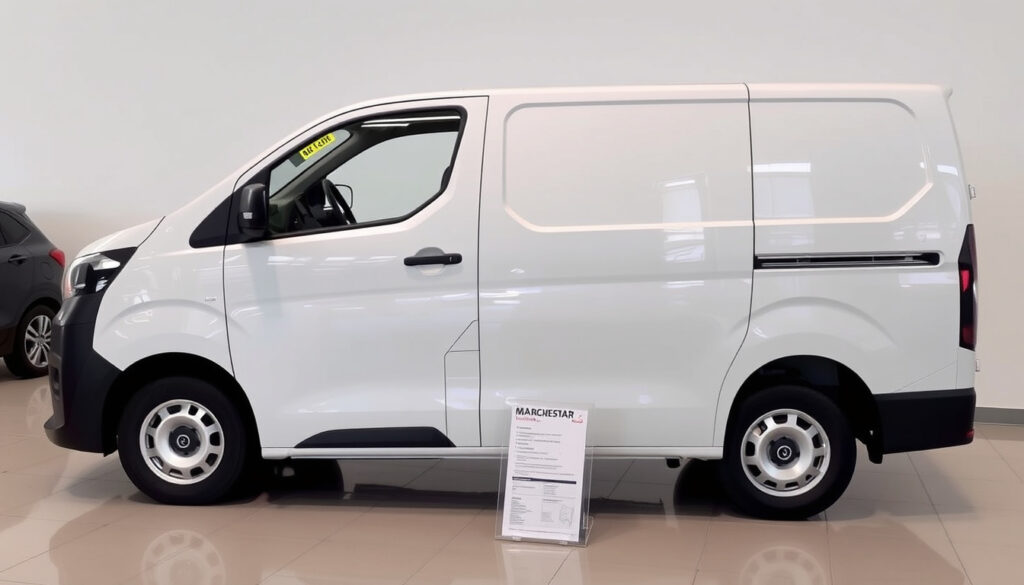
2026 Toyota HiAce: Pricing, Specs, Problems & Lifespan
Anyone who has ever needed a van that just keeps going—through city traffic, across dusty backroads, or on long highway hauls—has probably crossed paths with the Toyota HiAce. This guide gathers verified facts about the 2026 model, its pricing across markets, common issues to watch for, and what kind of lifespan you can realistically expect. You’ll get a clear picture of whether this global workhorse matches your needs, backed by data from official sources and automotive watchdogs.
First launched: October 1967 ·
Typical lifespan: 300,000–500,000 km with maintenance ·
Common engine: 2.7 L 4-cylinder (2005–present) ·
Seating capacity: Up to 7 passengers (luxury van variant) ·
Global markets: Over 100 countries including Japan, Australia, Europe, Africa
Quick snapshot
- HiAce launched in October 1967 Wikipedia (community-maintained encyclopedia)
- Available as a 7-seater luxury van Carsales (Australian car marketplace)
- Sold in over 100 countries Wikipedia (community-maintained encyclopedia)
- Common problems include oil leaks and timing chain wear Drive (Australian automotive publication)
- Exact 2026 pricing outside Australia and UAE
- Full 2026 specs for all global variants
- Future availability in North America
- October 1967: HiAce first launched Wikipedia (community-maintained encyclopedia)
- 2005: Introduction of 2.7 L engine variant (current generation) Drive (Australian automotive publication)
- 2026: Expected release of 2026 model (pricing TBA for many markets) Carsales (Australian car marketplace)
- Watch for official 2026 pricing announcements from Toyota Japan and other markets
- Potential expansion of hybrid powertrain options
- Aftermarket parts availability for 2.7 L models
| Attribute | Value |
|---|---|
| First production year | 1967 |
| Engine (common) | 2.7 L 4-cylinder (2005–present) |
| Max seating | 12 passengers |
| Typical lifespan | 300,000–500,000 km |
| Global markets | Over 100 countries |
How much is the 2026 Toyota HiAce?
Pricing for the 2026 HiAce varies dramatically depending on where you buy and which body style you choose. In Australia, where the van is a commercial staple, both Drive (Australian automotive publication) and Carsales (Australian car marketplace) have published lists already.
2026 Toyota HiAce price range
- Australia (MRLP): $51,880 to $80,656 excluding on-road costs Drive (Australian automotive publication)
- Australia (indicative drive-away): $56,188 to $88,987 Carsales (Australian car marketplace)
- UAE: 99,900 AED for the 2.7L manual, 131,900 AED for the 3.5L V6 manual Toyota UAE (official UAE distributor)
Factors affecting HiAce pricing
Trim level, seating capacity, and drivetrain choice create a wide spread. The Australian lineup alone includes 8 variants Carsales (Australian car marketplace) — from basic cargo vans to the Commuter GL passenger model. Expect that 2.7 L manual entry models will sit at the lower end of the range, while V6 automatics and luxury trims push higher.
Australian 2026 HiAce pricing is already public, but buyers in other regions (including Europe and Africa) may see different numbers because each Toyota distributor sets its own pricing. The UAE figures clarify that 2.7 L and 3.5 L models coexist globally, but not all markets offer both.
The pattern: If you’re shopping across borders, the HiAce can cost anywhere from roughly $35,000 USD equivalent (2.7 L base) to nearly $60,000 USD (well-equipped Commuter GL). The trade-off: a van with a proven reputation and global parts availability.
Is the Toyota HiAce a 7-seater?
Yes, but that’s just one of many seating configurations. The HiAce is available with 2, 3, 5, 7, or 12 seats depending on the variant Carsales (Australian car marketplace). The 7-seater layout typically appears in the luxury van variant, aimed at shuttle services and family transport.
HiAce seating configurations
| Variant type | Seats | Typical use |
|---|---|---|
| Cargo van | 2 or 3 | Goods delivery, trades |
| Commuter bus | 12 | School runs, group transport |
| Luxury passenger van | 7 | Chauffeur, tourism |
The seating count is the first clue to which camp the van belongs to — tradesperson or operator.
Luxury 7-seater van features
The 7-seater HiAce, often badged as “Commuter GL” or “Luxury”, comes with upgraded interior trim, climate control, and rear-seat ventilation Carsales (Australian car marketplace). In the UAE, the 3.5 L V6 model adds an 8-inch display with Apple CarPlay and a rear-view camera Toyota UAE (official UAE distributor).
The pattern: Toyota uses a single platform to serve two very different buyers—the tradesperson who wants a bare-bones box and the operator who needs a comfortable shuttle.
What are the common problems with HiAces?
The HiAce is generally durable, but no vehicle is immune. Owners and mechanics report a handful of recurring issues across the 2.7 L models (2005–present) and older generations.
Engine issues in 2.7 L models (2005–present)
- Valve cover gasket leaks — oil seeping onto the exhaust manifold, creating a burning smell Drive (Australian automotive publication)
- Timing chain tensioner wear — can cause a rattling noise on cold starts; if ignored, may lead to chain slip
- Rust on older models — particularly around rear wheel arches and underbody on vehicles in coastal climates
Transmission and rust concerns
Manual transmissions on earlier vans are robust, but the 6-speed manual in the 3.5 L V6 can develop notchiness over 150,000 km. Rust is the bigger long-term enemy: HiAce vans used in snowy road salt regions need regular underbody treatment. The 2.7 L engine itself is “generally reliable” per Drive (Australian automotive publication), but oil leaks are the most common owner complaint.
If you’re buying a used HiAce, look for oil stains on the engine block and listen for timing chain rattle at startup. A neglected 2.7 L that has been overheated poses a much bigger risk than one with proper service records.
The trade-off: The HiAce’s reliability reputation is earned—most issues are predictable and fixable with routine maintenance. The 2.7 L engine is not the most refined, but it’s easy to work on and parts are cheap almost everywhere the van is sold.
What countries sell the Toyota HiAce?
The HiAce is a genuine global phenomenon, sold in over 100 countries Wikipedia (community-maintained encyclopedia). Major markets include Japan (home market), Australia, New Zealand, the United Kingdom, Ireland, South Africa, and throughout the Middle East and Africa.
Global markets for HiAce
| Region | Typical variants | Market status |
|---|---|---|
| Australia & New Zealand | Commuter, Commuter GL, cargo van | Broad lineup, diesel-only for 2026 |
| Middle East (UAE, Saudi, etc.) | 2.7 L manual, 3.5 L V6 manual | Petrol models, 3-seat cargo focus |
| Europe (UK, Ireland, etc.) | Commuter, minibus, panel van | Diesel dominant, growing electric interest |
| Africa & Asia | Various petrol and diesel | High demand for durability on rough roads |
The pattern: each region gets the powertrain that fits its fuel infrastructure and duty cycle.
Regional variants and names
In some markets the HiAce is branded as the Toyota Commuter (for passenger versions) or simply the Toyota Hiace Van. It is not sold in the United States or Canada, due to import restrictions and the existence of the larger Toyota Sienna minivan. That leaves a huge gap: North American buyers who want a HiAce must import one, which is costly and complicated.
Why this matters: If you’re in a country that doesn’t sell the HiAce officially, your only path is a gray-market import—and you’ll lose access to warranty and local parts support. The van’s reputation is strongest where Toyota has a dealer network that stocks it.
What is the lifespan of a Toyota HiAce?
With proper care, a HiAce can run for hundreds of thousands of kilometers. Toyota’s own engineering targets a “typical lifespan” of 300,000 to 500,000 km CarsGuide (Australian automotive review site). Many owner reports on forums and taxi fleets exceed 500,000 km before major overhaul.
Mileage expectations
- 300,000 km — achievable with basic maintenance and oil changes every 10,000 km
- 500,000 km — realistic with attention to timing chain, cooling system, and rust prevention
- 600,000+ km — reported by many Australian and African operators who run diesel variants
Maintenance for longevity
The 2.7 L petrol engine needs timing chain inspection around 200,000 km. Diesel versions (Australian market) require turbocharger care and fuel filter changes every 20,000 km. The 5-year unlimited-kilometre warranty on the 2026 Australian model Drive (Australian automotive publication) signals Toyota’s confidence in the drivetrain.
The implication: The HiAce isn’t a disposable van. It’s built to be serviced and repaired, not scrapped. The key trade-off: you trade modern driving refinement for a far longer working life than most of its competitors.
Toyota HiAce 2026 specifications
Seven key specs, one pattern: the HiAce prioritises cargo space and ground clearance over car-like handling.
| Specification | Value |
|---|---|
| Length (LWB van) | 5,265 mm |
| Width | 1,950 mm |
| Height (LWB van) | 1,990 mm |
| Wheelbase | 3,210 mm |
| Ground clearance | 180 mm |
| Turning circle | 11.00 m |
| Boot space (van) | 9,300 litres |
| Tyre size (standard) | 215/70 R16C |
All dimensions above come from CarsGuide (Australian automotive review site) for the 2026 LWB diesel auto. The SLWB Commuter is 5,915 mm long and 2,280 mm tall—a full 650 mm longer.
Pros and cons of the Toyota HiAce
Upsides
- Proven durability — 300,000–500,000 km lifespan common
- Global parts availability (over 100 countries)
- Multiple seating configurations (2–12 seats)
- 5-year unlimited-km warranty in Australia
- 5-star ANCAP safety rating (2025 test) Drive (Australian automotive publication)
Downsides
- Not available new in US or Canada
- 2.7 L petrol engine prone to oil leaks
- Basic interior in cargo variants
- Manual transmission only in some markets (UAE)
- Fuel economy moderate (7.4–8.1 L/100 km diesel) Drive (Australian automotive publication)
Timeline: Key dates in HiAce history
- October 1967 — Toyota HiAce first launched Wikipedia (community-maintained encyclopedia)
- 2005 — Introduction of 2.7 L engine variant (current generation) Drive (Australian automotive publication)
- 2026 — Expected release of 2026 model (pricing TBA for many markets) Carsales (Australian car marketplace)
What we know for sure — and what’s still unclear
Confirmed facts
- HiAce launched in 1967 Wikipedia (community-maintained encyclopedia)
- Available as 7-seater luxury van Carsales (Australian car marketplace)
- Sold in 100+ countries Wikipedia (community-maintained encyclopedia)
- Common problems include oil leaks and timing chain wear Drive (Australian automotive publication)
- 2026 Australian models priced $45,300–$88,987 drive-away Carsales (Australian car marketplace)
What’s unclear
- Exact 2026 pricing for Europe, Africa, and Asia outside UAE/Australia
- Full 2026 specifications for all global variants
- Whether Toyota will ever officially bring HiAce to North America
- 2026 model changes beyond powertrain and trim updates
Quotes from the field
“The Toyota HiAce has been the backbone of small business transport in Australia for decades. The 2026 model continues that legacy with improved safety and a diesel-only lineup that suits our market.”
— Drive (Australian automotive publication), 2026 HiAce overview
“For fleet operators, the HiAce represents a low-risk investment: high resale value, predictable maintenance, and a support network that spans the globe.”
— Carsales (Australian car marketplace), market analysis
For fleet operators in Australia and the Middle East, the HiAce remains an asset with high resale value and a support network that spans the globe. For private buyers in North America or Europe, the calculus is harder—import hurdles or limited availability mean you pay a premium for that legendary reliability. The choice: if you can buy it locally, do it; if you have to import, know exactly what you’re getting into.
Related reading: 2024 Tesla Model 3: Price, Specs & Ireland Reviews
For a detailed look at the 2025 model, the 2025 Toyota Hiace pricing and specs offers current pricing and dealer listings.
Frequently asked questions
What is the fuel economy of a Toyota HiAce?
The Australian 2026 HiAce diesel reports 7.4 to 8.1 L/100 km combined Drive (Australian automotive publication). UAE petrol models (2.7L and 3.5L) are less efficient—expect 10–12 L/100 km in mixed driving.
Does the Toyota HiAce have a diesel engine?
In Australia, the 2026 HiAce is diesel-only Drive (Australian automotive publication). In the UAE and many other markets, petrol engines (2.7L and 3.5L) are the main offerings. Diesel availability depends on the region.
Is the Toyota HiAce good for camping conversions?
Yes—its boxy shape, high roof options, and proven reliability make it a popular camper base. The LWB van offers 9,300 litres of cargo space Carsales (Australian car marketplace), enough for a full conversion with a bed, kitchen, and storage.
How much does a used Toyota HiAce cost?
In Ireland, used HiAce vans start around €4,000 for older models. In Australia, a 5–10 year old HiAce with 200,000 km typically costs $15,000–$30,000 AUD. Prices vary heavily by condition and rust history.
What is the towing capacity of a Toyota HiAce?
Official towing capacity varies by market and engine. Australian 2026 HiAce vans are rated to tow up to 1,500 kg braked. Check your local variant’s placard—the 2.7L petrol may be lower.
Are Toyota HiAce parts expensive?
No—parts are cheap and widely available in countries where the HiAce is sold. Genuine Toyota parts for the 2.7L engine cost about 20–30% less than comparable Mercedes or Ford van components.
How often should I service a Toyota HiAce?
Toyota recommends service every 12 months or 10,000 km, whichever comes first. For heavy use (taxi, delivery), halve the oil change interval. The 5-year unlimited-km warranty in Australia requires adherence to the schedule Drive (Australian automotive publication).
More related posts
 Crazy Games 2: Free 2-Player Browser Games Platform
 Christina Grimmie Shooting: What Happened and Aftermath
 Dolphin Pool Cleaner – Best Models for 2026 Pools
 Ben Schwartz: Biography, Career, and Personal Life
 Tow Truck Near Me in Ireland: Costs & 24/7 Services
 Queen Charlotte: Historical Facts vs Netflix Fiction
 Stefanos Tsitsipas: Biography, Relationship, Children & News
 Jeffrey Epstein: Verified Facts, Sources, Unanswered Questions