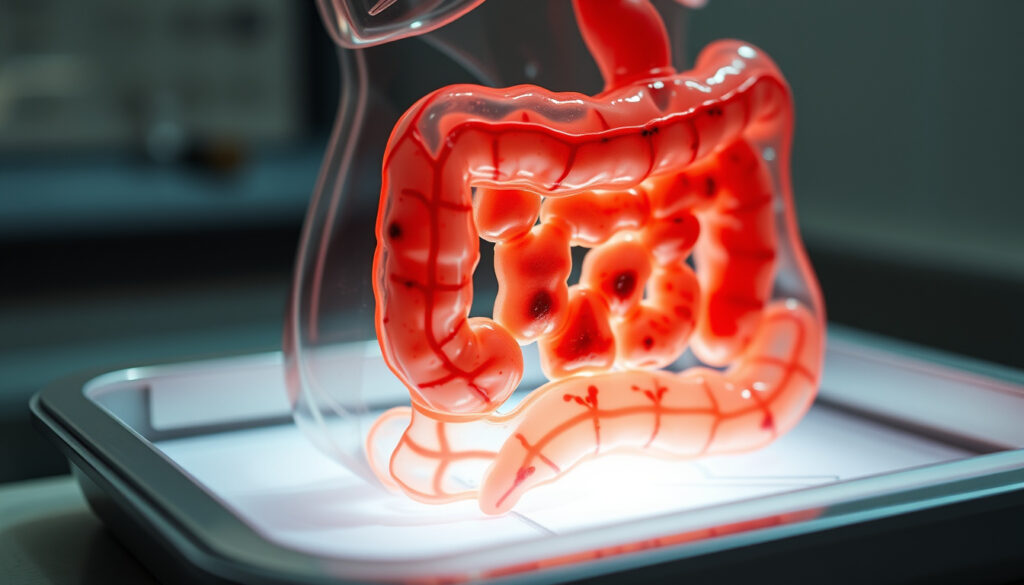
Crohn’s Disease Symptoms: Early Signs and Warnings
Brooke’s stomach cramps at age 8 were dismissed as a phase until a misdiagnosis delayed proper treatment for two years. More than half a million Americans have Crohn’s disease, and many spend months mistaking its early signs for something less serious.
Lifelong condition: Affects digestive system ·
Key symptoms: Diarrhea, abdominal pain, fatigue ·
Other signs: Fever, weight loss, mouth sores ·
Common location: Small intestine and colon
Quick snapshot
- Persistent diarrhea, pain, fatigue Healthline
- Inflamed parts of digestive tract NCBI Bookshelf
- Peak onset at 15–30 and 40–60 years NCBI Bookshelf
- Exact root cause of the disease
- Why seasonal diagnosis patterns exist
- Full mechanism of immune system attacks
- Many patients relapse within 8 years Healthline
- 10-year remission rate: 43–45% Healthline
- Diagnosis peaks in summer, lowest in winter (Healthline)
- If remission lasts 1 year, 80% chance it continues
- Early detection improves long-term outcomes
- Treatment can control symptoms effectively
Key facts about Crohn’s disease based on medical literature and clinical studies.
| Attribute | Value |
|---|---|
| Primary affected area | Digestive system |
| Hallmark symptom | Persistent diarrhea |
| Common companion sign | Abdominal pain |
| Peak onset ages | 15–30 years and 40–60 years |
| Incidence (Northern Europe/Jewish descent) | 5 to over 12 per 100,000 person-years |
| Most common misdiagnosis | Irritable bowel syndrome (IBS) |
| 10-year remission rate | 43–45% |
| Extended remission probability | 80% after 1 year of remission |
What are early warning signs of Crohn’s disease?
Crohn’s disease is an autoimmune condition that causes inflammation in the digestive tract, triggering the immune system to attack the gut lining. Early symptoms often hide in plain sight—easy to dismiss as stress, a stomach bug, or just bad eating habits. Recognizing the pattern of these early warning signs matters because the condition rarely resolves on its own.
Gastrointestinal symptoms
- Chronic diarrhea: This is often the first sign that something is wrong. Unlike occasional diarrhea from food poisoning, diarrhea from Crohn’s disease tends to be persistent, sometimes lasting weeks. Nocturnal diarrhea—diarrhea that wakes you up at night—is a particularly strong early warning sign that should prompt a doctor’s visit AARP.
- Abdominal pain and cramping: Recurrent mild abdominal pain, often described as cramps, is common in early Crohn’s disease. The pain typically centers around the belly button or lower right abdomen and may come and go in waves NCBI Bookshelf.
- Blood in stool: While not always visible, blood in the stool can appear as darker, tarry stools or bright red streaks. This symptom should never be ignored and warrants medical evaluation Healthline.
Many patients with Crohn’s disease will experience a flare-up within 8 years of diagnosis, according to Healthline. Catching symptoms early and starting treatment before severe inflammation sets in can improve long-term management outcomes.
Systemic signs like fatigue and fever
- Fatigue: Feeling unusually tired even after a full night’s sleep is a hallmark of Crohn’s disease. As the disease progresses, patients often develop anemia, which worsens fatigue Healthline.
- Low-grade fever: A mild fever lasting three months or longer can point to Crohn’s disease. This systemic sign often accompanies the abdominal symptoms and reflects ongoing inflammation in the body AARP.
- Unintentional weight loss: When the digestive tract is inflamed, the body struggles to absorb nutrients properly. Combined with reduced appetite, this leads to unexplained weight loss that can happen surprisingly quickly Healthline.
Personal early experiences
Brooke’s story demonstrates how early Crohn’s symptoms get missed. Her symptoms began at age 8 with stomach cramps and general malaise, but it took until age 10 for her to receive a proper diagnosis. During those two years, she managed symptoms with over-the-counter medications while the underlying disease progressed untreated Crohns and Colitis Australia.
Diagnostic delays like Brooke’s are common. There is no single test for Crohn’s disease—doctors must rule out other conditions and use a combination of blood tests, imaging, and endoscopic procedures to confirm the diagnosis AARP.
What are the first signs of Crohn’s disease?
Beyond the obvious gastrointestinal symptoms, Crohn’s disease often announces itself through signs that seem unrelated to digestion. Understanding these less obvious first signs can help patients and doctors connect the dots faster.
Initial digestive issues
- Bloating and gas: Frequent flatulence and abdominal bloating often accompany early Crohn’s disease, sometimes preceding more severe symptoms by months NCBI Bookshelf.
- Changes in bowel habits: Initial symptoms often include periods of frequent diarrhea interspersed with asymptomatic stretches where patients feel normal. This on-again, off-again pattern is characteristic of early Crohn’s disease NCBI Bookshelf.
- Reduced appetite: Many patients report feeling less hungry before other symptoms become severe, often without understanding why Healthline.
Mouth sores and appetite changes
- Aphthous stomatitis: Recurring mouth ulcers or canker sores are a surprisingly common early sign of Crohn’s disease, appearing even before significant gut symptoms develop.
- Food aversions: Patients often develop an aversion to certain foods, particularly those high in fiber, as the inflamed intestine struggles to process them.
Patient stories of onset
Christopher’s experience highlights another common path to diagnosis. Initially diagnosed with hemorrhoids, his actual condition remained hidden until a colonoscopy revealed 32 ulcers throughout his digestive tract. It was only then, under the care of Dr. David P. Hudesman at NYU Langone’s Inflammatory Bowel Disease Center, that he received the correct diagnosis of Crohn’s disease and began treatment with Remicade NYU Langone.
Whitney Ramirez faced a different misdiagnosis path—she was initially told she had ulcerative colitis before learning she actually had Crohn’s disease. Today, at 29, she manages her condition as an executive, demonstrating that proper diagnosis and treatment can enable a full, active life AARP.
What foods trigger Crohn’s disease?
While food doesn’t cause Crohn’s disease, certain foods can trigger flare-ups or worsen symptoms by irritating the already inflamed digestive tract. Understanding which foods to avoid during active symptoms can make a significant difference in daily comfort.
Common trigger foods
- Dairy products: Many Crohn’s patients are lactose intolerant, and dairy can exacerbate diarrhea and abdominal pain during flares.
- High-fiber foods during flares: While fiber is generally healthy, during active inflammation, high-fiber foods like whole grains, nuts, and seeds can irritate the intestinal lining and worsen symptoms.
- Spicy foods: Hot peppers and spicy seasonings can trigger abdominal pain and diarrhea in sensitive individuals.
- Fatty and fried foods: These take longer to digest and can increase intestinal contractions, leading to cramping and diarrhea.
- Caffeine and carbonated drinks: Both can stimulate the intestines and worsen diarrhea symptoms.
Lettuce and high-fiber issues
Raw vegetables like lettuce, though healthy for most people, present a particular challenge for those with Crohn’s disease. The high fiber content and difficult-to-digest cell walls of raw lettuce can scrape against inflamed intestinal tissue, causing pain and potentially triggering a flare. Many patients find that cooked or steamed vegetables are better tolerated during active disease periods.
Diet management tips
- Keep a food diary to identify personal trigger foods.
- Eat smaller, more frequent meals rather than large ones.
- Stay hydrated, especially during diarrhea episodes.
- Work with a dietitian familiar with inflammatory bowel disease to develop a personalized eating plan.
Diet triggers vary significantly between individuals—what causes a flare for one patient may be perfectly tolerable for another. Identifying personal food triggers through careful self-monitoring and professional guidance is essential.
What could be mistaken for Crohn’s?
Crohn’s disease shares symptoms with several other conditions, which is why misdiagnosis is common. Understanding these mimicking conditions can help patients advocate for more thorough evaluation.
Similar conditions
- Irritable bowel syndrome (IBS): Crohn’s disease is frequently misdiagnosed as IBS, according to a 2023 report in Diagnostics. Both conditions cause abdominal pain, diarrhea, and bloating, but IBS doesn’t involve the inflammation or tissue damage seen in Crohn’s disease. The critical difference: IBS doesn’t cause bloody stools or significant weight loss AARP.
- Ulcerative colitis: Another form of inflammatory bowel disease, ulcerative colitis causes similar symptoms but affects only the colon and rectum, whereas Crohn’s can involve any part of the digestive tract from mouth to anus GoodRx.
- Intestinal tuberculosis (ITB): This is particularly challenging because the clinical symptoms of Crohn’s disease and intestinal tuberculosis are nearly identical—both cause abdominal pain, diarrhea, weight loss, fever, and intestinal obstruction. Laboratory features including anemia, raised ESR, and raised CRP are also common to both conditions PMC.
- Hemorrhoids: As in Christopher’s case, rectal bleeding from Crohn’s can easily be attributed to hemorrhoids, delaying proper diagnosis.
Key differences in symptoms
- Rectal bleeding is more prominent in ulcerative colitis than Crohn’s.
- Perianal disease (fistulas, abscesses) suggests Crohn’s rather than ulcerative colitis.
- Nocturnal diarrhea points more strongly toward Crohn’s or another organic disease rather than IBS.
- Constitutional symptoms like fever and weight loss are more common in Crohn’s than IBS.
Diagnostic challenges
There is no single test for Crohn’s disease. Doctors typically use blood tests, stool tests, colonoscopy, endoscopy, imaging studies, and sometimes biopsy to build a complete picture. A Chinese cohort study of 2,038 patients found that the rate of diarrhea, fever, bloody stools, and weight loss were significantly higher in the first five years after diagnosis, suggesting symptoms may evolve or become better controlled over time PMC.
If you’ve been diagnosed with IBS but treatments aren’t working, ask your doctor about testing for inflammatory bowel disease. Complex anal fistulas, abscesses that drain pus, or non-healing lesions can be strong early signs of Crohn’s disease that differentiate it from IBS AARP.
At what age do people usually get Crohn’s?
Crohn’s disease doesn’t discriminate by age, but certain age groups are more commonly affected. Understanding the typical age of onset can help doctors and patients recognize symptoms more quickly.
Typical onset age
Crohn’s disease exhibits a bimodal age distribution, with the first peak onset occurring between 15 and 30 years and a second peak between 40 and 60 years. This pattern is well-documented in medical literature and helps explain why the condition is often diagnosed in young adults NCBI Bookshelf.
Incidence rates in Northern European or Jewish descent populations typically range from approximately 5 to over 12 per 100,000 person-years, making it a significant health concern in these demographic groups NCBI Bookshelf.
Symptoms in kids
Crohn’s disease in children often presents differently than in adults. Brooke’s experience—developing symptoms at age 8 and diagnosed at age 10—reflects a pattern seen in pediatric cases where symptoms may be attributed to other childhood illnesses.
In a Chinese cohort study, patients with granulomas (a type of tissue inflammation) were diagnosed with Crohn’s disease at an earlier age compared to those without granulomas, suggesting that certain biological markers may influence when and how the disease manifests PMC.
Symptoms in adults
For adults in the 40–60 age group, symptoms may develop more gradually or be mistaken for other age-related digestive issues. Adults may also experience more severe disease progression if diagnosis was delayed from younger years.
Seasonal patterns also influence when people are diagnosed. Research shows that diagnosis of Crohn’s disease tends to have its highest incidence in summer and lowest in winter. Interestingly, patients diagnosed in winter appear to have a milder form of the disease, possibly because summer cases involve more acute symptom presentation PMC.
What we know and what remains unclear
Confirmed facts
- Chronic diarrhea, abdominal pain, and fatigue are hallmark symptoms Healthline, NCBI Bookshelf
- Inflammation can affect any part of the digestive tract NCBI Bookshelf
- Bimodal onset age: 15–30 and 40–60 years NCBI Bookshelf
- IBS is the most common misdiagnosis AARP, 2023 Diagnostics report
- 10-year remission rate: 43–45% Healthline
- Extraintestinal manifestations occur in 12.81% of patients in China PMC
What’s unclear
- The exact root cause of Crohn’s disease remains unknown
- Why diagnosis peaks in summer but milder cases are diagnosed in winter
- The precise mechanism triggering the immune system to attack the gut
- Why some patients develop granulomas and others don’t
Expert perspectives
“There is no single test for Crohn’s disease. Doctors must piece together multiple sources of information—blood work, imaging, and endoscopic findings—to arrive at an accurate diagnosis. This is why patient advocacy matters. If symptoms persist, keep asking questions.”
— Dr. David P. Hudesman, Gastroenterologist at NYU Langone Inflammatory Bowel Disease Center
“My symptoms started so gradually. I thought everyone felt tired all the time and had occasional stomach cramps. By the time I finally saw a specialist, I had lost 15 pounds and was anemic. Early detection would have saved me years of feeling terrible.”
— Brooke, diagnosed at age 10, patient advocate Crohns and Colitis Australia
Related reading: Symptoms of Pregnancy
goodrx.com, ddsqc.com, crohnscolitisfoundation.org, chop.edu, ubiehealth.com
Frequently asked questions
Can Crohn’s disease kill you?
Crohn’s disease itself is rarely fatal, but complications from the disease—such as severe malnutrition, bowel obstruction, or colon cancer—can be serious if left untreated. With proper medical management, most people with Crohn’s disease live full, active lives. The key is early diagnosis and consistent treatment.
Is Crohn’s disease cancer?
No, Crohn’s disease is not a form of cancer. It is an autoimmune inflammatory bowel disease that causes chronic inflammation in the digestive tract. However, long-standing Crohn’s disease does increase the risk of developing colorectal cancer, which is why regular monitoring through colonoscopy is recommended for patients with extensive colon involvement.
Is Crohn’s disease serious?
Crohn’s disease is a serious chronic condition that requires ongoing medical management. While symptoms can be controlled with medication and lifestyle adjustments, the disease tends to be lifelong. Most patients experience periods of flare-ups and remission. With proper treatment, many achieve long-term remission—data shows an 80% chance of continued remission if a patient stays in remission for one year.
What is the root cause of Crohn’s disease?
The exact cause remains unknown. Current understanding points to a combination of genetic predisposition, abnormal immune response, and environmental factors. Crohn’s disease runs in families—having a first-degree family member with confirmed IBD is a strong indicator that you may have Crohn’s disease. Urban populations also show higher incidence rates compared to rural populations.
Why can’t you eat lettuce with Crohn’s?
Raw, fibrous vegetables like lettuce can be difficult for people with Crohn’s disease to digest, especially during flare-ups. The tough cell walls and high fiber content can scrape against inflamed intestinal tissue, causing pain and potentially worsening symptoms. Many patients find that cooking vegetables makes them easier to tolerate during active disease periods.
How is Crohn’s disease diagnosed?
Diagnosis requires a combination of tests since there is no single definitive test. These typically include blood tests (to check for anemia and inflammation markers), stool tests, colonoscopy with biopsy, upper endoscopy, and imaging studies like CT or MRI. The process also involves ruling out other conditions that mimic Crohn’s, such as IBS, ulcerative colitis, and intestinal tuberculosis.
What is the difference between Crohn’s disease and ulcerative colitis?
Both are inflammatory bowel diseases with similar symptoms, but key differences exist. Ulcerative colitis affects only the colon and rectum, causing continuous inflammation limited to the innermost lining. Crohn’s disease can affect any part of the digestive tract from mouth to anus and causes inflammation that extends through multiple layers of bowel wall. Crohn’s also often causes perianal disease (fistulas, abscesses) which is rare in ulcerative colitis.
More related posts
 Pink Video Chat Review: Free Instant 1v1 Random Calls
 Cosmic Kylie Jenner Perfume: Scent Notes & Reviews
 Jimmy Page: Biography, Net Worth, Feuds, and Key Facts
 Dwayne Johnson: Age, Height, Net Worth, Movies & More
 Laurence Fox: Partner, Divorce, and Legal Troubles
 Parasympathetic Nervous System: Function, Activation, and Healing
 Keith Richards: Net Worth, Sobriety, Health & Mick Jagger
 Joshua Brown: Childcare Accused, Violinist, and Rugby Coach