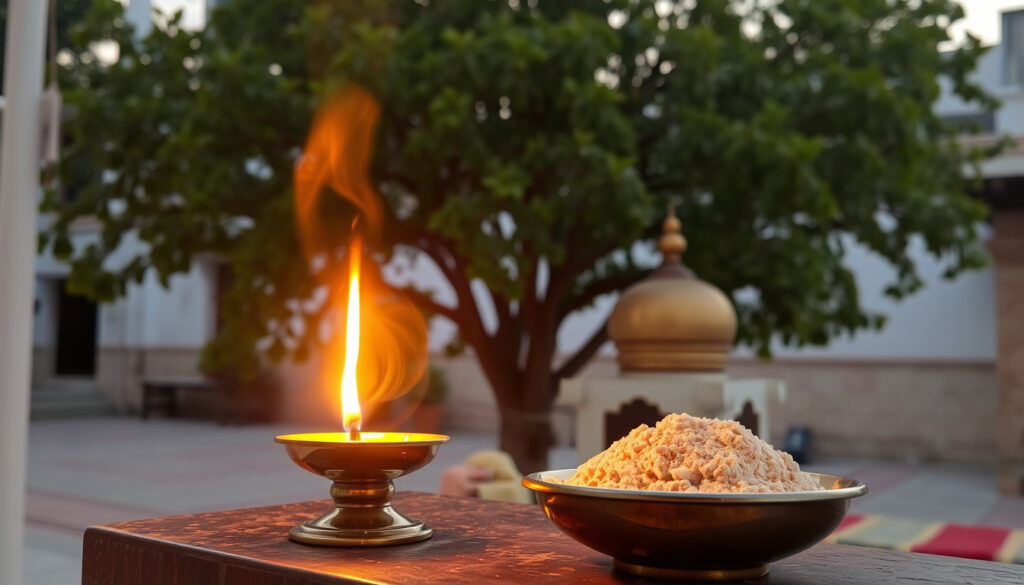
Sai Baba: Life, Teachings & Miracles of Shirdi’s Saint
For someone who never wrote a single holy book or founded an organized religion, Sai Baba of Shirdi has inspired an extraordinary following that crosses faiths and generations. Born around 1838, this spiritual master spent most of his life in a small mosque in Shirdi, Maharashtra, attracting devotees from both Hindu and Muslim communities, and his message of faith and patience remains as compelling today as it was a century ago, offering a window into India’s rich syncretic traditions.
Birth year (approx.): 1838 ·
Death date: 15 October 1918 ·
Place of residence: Shirdi, Maharashtra, India ·
Primary shrine: Samadhi Mandir, Shirdi ·
Revered by: Hindus and Muslims
Quick snapshot
- Sai Baba lived in Shirdi from c. 1858 until 1918 (Britannica)
- He was revered by both Hindus and Muslims (Wikipedia)
- His teachings centered on love, charity, and forgiveness (Cambridge University Press)
- His birth name and parentage are unknown (Wikipedia)
- Exact birth date and place remain unconfirmed (Britannica)
- His religious affiliation at birth is debated among scholars (Britannica)
- c. 1838: Birth (date uncertain) (Wikipedia)
- c. 1858: Arrives in Shirdi (Shirdi Sai Parivaar)
- 15 Oct 1918: Death (Britannica)
- Shirdi remains a major pilgrimage destination (Shree Saibaba Sansthan Trust, Shirdi)
- Devotee literature and apps continue to spread his teachings (Google Play listing for official application)
- Interfaith devotion shows no sign of fading (Cambridge University Press)
Of the six key biographical facts, one pattern stands out: most of Sai Baba’s personal details remain a mystery, yet his impact is well documented.
| Label | Value |
|---|---|
| Full name | Unknown; commonly called Shirdi Sai Baba |
| Birth | c. 1838 (exact date unknown) |
| Death | 15 October 1918 |
| Father’s name | Unknown |
| Religion | Syncretic; Hindu-Muslim |
| Famous quote | Shraddha Saburi (Faith and Patience) |
What was Sai Baba famous for?
Sai Baba is best known as a spiritual master who taught a message of love, forgiveness, and charity that transcended religious boundaries. His fame rests not on scriptures or institutions, but on the profound connection he built with diverse devotees in the small village of Shirdi.
Spiritual teachings and philosophy
- He emphasized faith (shraddha) and patience (saburi) as the core of spiritual practice (Britannica)
- His advice often focused on contentment, inner peace, and helping others (Lovenspire)
- He rejected formal rituals and encouraged direct devotion to God (Cambridge University Press)
Role as a saint and fakir
Sai Baba lived as a fakir—a Muslim ascetic—yet freely participated in Hindu practices like lighting lamps and reading scripture. This dual role made him a unique figure in 19th-century India, respected by both communities as a living bridge between traditions.
The pattern: his deliberate ambiguity about his own background allowed people from all faiths to see themselves in him.
Sai Baba’s refusal to identify with any single religion meant that a Hindu villager and a Muslim trader could each find a spiritual home in his presence. That syncretic space—not any single doctrine—is what made him famous.
The implication: His fame is built on inclusivity, not dogma.
What is Baba’s religion?
Sai Baba’s religion is not definitively known, and that uncertainty is central to his identity. He lived in a mosque (Dwarkamai) but performed Hindu rituals, creating a syncretic practice that defied categorization.
Hindu influences
- He observed Hindu festivals like Rama Navami (Wikipedia)
- He used Hindu terms and referred to Hindu gods in his teachings (Britannica)
- Many Hindu devotees saw him as an incarnation of a divine being
Muslim influences
- He lived in the Dwarkamai mosque and wore a kafni (Muslim robe) (Shree Saibaba Sansthan Trust, Shirdi)
- He used Islamic phrases such as “Allah Malik” (God is Master) (Wikipedia)
- He was buried in a manner that respected both traditions
Syncretic practices
Sai Baba’s daily routine blended faiths: he maintained a sacred fire (dhuni) in the mosque, offered food to all regardless of religion, and allowed both Hindu and Muslim devotees to worship him. The Cambridge study notes that this fluid identity made him a powerful symbol of unity in colonial India.
The implication: Sai Baba’s religious identity was deliberately undefined, inviting each devotee to connect on their own terms.
What was the miracle of Sai Baba?
Miracle stories are central to Sai Baba’s devotional tradition. A Cambridge journal article describes miracle cures as one of his most important perceived qualities, and belief in his healing power continued after his death.
Miracles at Dwarkamai
- He reportedly materialized objects like sweets and flowers (Shirdi Sai Baba Devotees)
- He healed devotees of chronic illnesses (Cambridge University Press)
- He protected villagers from plague by burning the disease in his sacred fire
Healing and materialization
According to devotees, Sai Baba could appear in different places at once and knew devotees’ thoughts. These stories are documented in hagiographies like the Sai Satcharitra, which remains widely read today (Google Play listing for official application).
Stories of divine intervention
One well-known account tells of a devotee whose sick child was cured after Baba’s blessing, even though Baba was miles away. Such narratives have sustained devotion for over a century.
The trade-off: miracle stories strengthen faith but also invite skepticism. For believers, they are evidence of divinity; for historians, they reflect the deep emotional needs of a suffering population.
The miracle tradition around Sai Baba isn’t just folklore—it drove the institutionalization of Shirdi as a pilgrimage center. The Shree Saibaba Sansthan Trust now manages millions of visitors each year, turning personal stories into a global spiritual economy.
The pattern: Miracles are the engine of devotion, not just decoration.
Was Sai Baba born a Hindu?
Sai Baba’s birth religion is unknown. He never disclosed his background, and all theories remain speculative.
Uncertain origins
- No official records of his birth exist (Wikipedia)
- Some oral traditions claim he was born to Hindu parents; others suggest a Muslim upbringing (Wikipedia)
- His refusal to answer questions about his past reinforced his mystique
Birth and early life theories
A devotional history claims he first came to Shirdi at about age 16 (Artarium), but the exact date and place remain unverified. The official trust does not state a definitive biography.
The catch: because Sai Baba deliberately erased his past, devotees are free to project their own beliefs onto his origin story. This ambiguity itself became a spiritual tool.
Did Sai Baba support Muslims?
Yes, but not exclusively. Sai Baba respected both Hindu and Muslim traditions equally, teaching that all paths lead to the same God.
Relations with Muslim community
- He lived in Dwarkamai, a mosque, which he called home (Shree Saibaba Sansthan Trust, Shirdi)
- He used Islamic phrases and recited verses from the Quran in his discourses (Britannica)
- Muslim devotees felt welcome to pray in his presence
Teachings on religious tolerance
Sai Baba famously declared, “Allah and Brahma are the same.” He rejected the idea that any one religion held exclusive truth. This message resonated in a colonial India where communal tensions were rising.
The pattern: Sai Baba didn’t just tolerate other faiths—he actively blended them, setting an example of lived syncretism.
Timeline of Sai Baba’s Life
- c. 1838 – Sai Baba born (exact date and place unknown) (Wikipedia)
- c. 1858 – Arrives in Shirdi, Maharashtra (Shirdi Sai Parivaar)
- Late 19th century – Gains following; performs miracles (Cambridge University Press)
- 15 October 1918 – Dies; Samadhi Mandir built in Shirdi (Britannica)
- 20th century – Shirdi becomes major pilgrimage site (Shree Saibaba Sansthan Trust, Shirdi)
Confirmed facts
- Sai Baba lived in Shirdi from c. 1858 to 1918 (Britannica)
- He was revered by both Hindus and Muslims (Wikipedia)
- He taught love, charity, and patience (Cambridge University Press)
- His death date is 15 October 1918 (Britannica)
What’s unclear
- His birth name and parentage (Wikipedia)
- Exact birth date and place (Britannica)
- His religious affiliation at birth (Britannica)
- Details of his early life before Shirdi (Shirdi Sai Parivaar)
Quotes and testimonies
“Why fear when I am here?”
— Attributed to Sai Baba, said to reassure devotees (Britannica)
“Shraddha Saburi (Faith and Patience) are the keys to liberation.”
— Sai Baba’s core teaching, repeated in devotional literature (Lovenspire)
“He healed my mother when doctors had given up. That is why we travel to Shirdi every year.”
— Devotee account, typical of miracle narratives (Shirdi Sai Baba Devotees)
Sai Baba’s enduring legacy is not a fixed biography or a set of doctrines, but a living invitation to find unity in diversity. For today’s seekers—whether Hindu, Muslim, or undecided—the challenge is clear: embrace the ambiguity, or miss the point of a saint who chose to be everything to everyone.
For readers interested in a more detailed overview, this guide to the saint of Shirdi explores the saint’s miracles and daily life in depth.
Frequently asked questions
What is the significance of Dwarkamai in Sai Baba’s life?
Dwarkamai was the mosque where Sai Baba lived for most of his time in Shirdi. It served as a space for all faiths to gather, and he kept a sacred fire (dhuni) there that is still maintained by the trust (Shree Saibaba Sansthan Trust, Shirdi).
How did Sai Baba die?
Sai Baba died on 15 October 1918 after a brief illness. His body was entombed in the Samadhi Mandir in Shirdi, which later became the main temple (Wikipedia).
What is the Sai Baba temple in Shirdi like?
The Samadhi Mandir is a white marble structure with a gold-plated dome. It houses a life-size marble statue of Sai Baba and attracts thousands of pilgrims daily. The official trust manages accommodation and prasad distribution (Shree Saibaba Sansthan Trust, Shirdi).
Why is Sai Baba called ‘Shirdi’ Sai Baba?
The name distinguishes him from later spiritual figures also called Sai Baba (like Sathya Sai Baba). “Shirdi” refers to the Maharashtra village where he spent nearly 60 years of his life (Wikipedia).
What are the main festivals celebrated at Shirdi?
Key festivals include Vijayadashami (death anniversary), Ram Navami (birth celebration), and Guru Purnima. During these events, the temple hosts special aartis and processions (Shree Saibaba Sansthan Trust, Shirdi).
How do devotees worship Sai Baba today?
Devotees offer prayers, perform aarti, read the Sai Satcharitra, and visit Shirdi. Many also maintain home altars and use the official digital app for online darshan and e-prasad (Google Play listing for official application).
Related reading: Saint Mary MacKillop: Biography, Miracles, and Legacy · Morning Star: Meaning, Symbolism, and History Across Cultures
More related posts
 Spotlight Hervey Bay – Whale Watching Guide 2025
 Flights to Tokyo – Cheapest US Deals and Booking Guide
 Martyn Ford: Height, Weight, Illness, and Movies
 Alex Consani: Age, Height, Pronouns, and Career Milestones
 Ladies Jackets: Dressy, Casual, and Sale Options in Ireland
 Michelle Pfeiffer: Biography, Age, Children & Career
 Iran and Israel Conflict 2025: History & War Updates
 Mekia Cox: The Rookie, Michael Jackson Dance & Bio