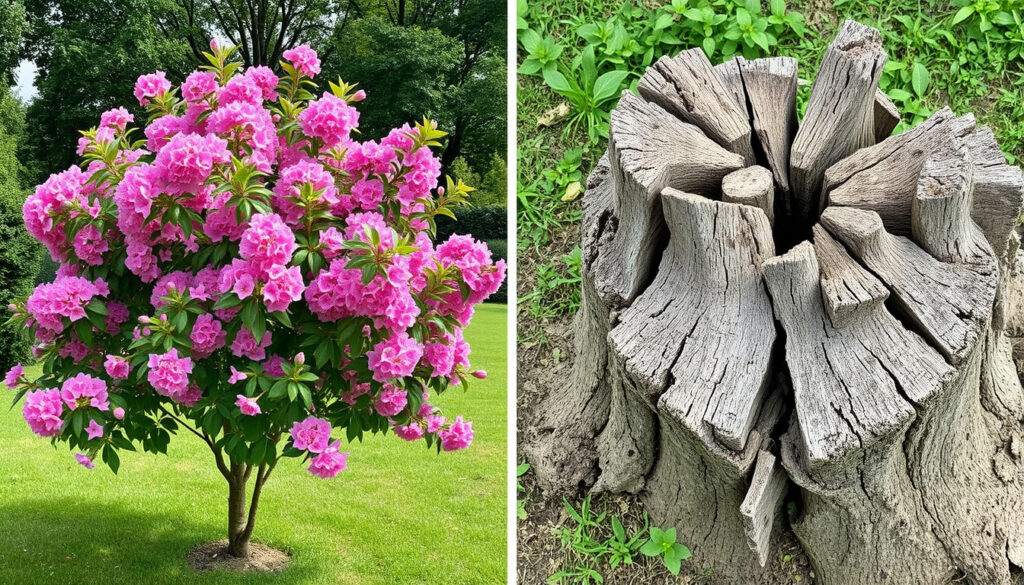
Crepe Myrtle: Lifespan, Care, and the ‘Crape Murder’ Mistake
There’s a reason why crepe myrtles (Lagerstroemia indica) have become a staple in gardens across the southern United States and beyond. Their summer-long blooms and exfoliating bark offer year-round interest. But for every gardener who swears by them, another has a cautionary tale about pruning gone wrong or a tree that never quite bloomed. This guide sorts the facts from the folklore, covering everything from lifespan and frost tolerance to the dreaded “crape murder” and whether you can grow one in the UK.
Lifespan: 20 to 50 years ·
Height: 10 to 30 feet ·
Hardiness zones: USDA zones 6 through 9 ·
Origin: Indian subcontinent and Southeast Asia ·
Bloom time: Summer to autumn ·
Sun requirement: Full sun
Quick snapshot
- Crepe myrtle is deciduous and loses leaves in winter (Missouri Botanical Garden (botanical authority))
- Flowers are produced on new wood (Clemson Home & Garden Information Center (university extension))
- Best flowering requires at least 6 hours of direct sun per day (Missouri Botanical Garden (botanical authority))
- Exact lifespan depends heavily on pruning practices and local climate (Monrovia (premium nursery))
- Whether a tree will survive an unusually cold winter in zone 6 is uncertain — results vary by microclimate (Missouri Botanical Garden (botanical authority))
- Late winter (Feb–Mar) = best pruning window before spring growth (Monrovia (premium nursery))
- Summer to autumn = main flowering period (Missouri Botanical Garden (botanical authority))
- Autumn leaf drop = prepare for winter dormancy (Missouri Botanical Garden (botanical authority))
- Monitor for root rot in wet soil; ensure drainage (Garden Oracle (horticultural reference))
- Apply mulch around the base in autumn to protect roots in borderline zones (Royal Horticultural Society (UK’s leading gardening charity))
- Remove spent seed capsules to potentially trigger a second bloom (Garden Oracle (horticultural reference))
Seven key facts, one takeaway: Crepe myrtle is a sun-hungry, summer-blooming tree that rewards careful placement but punishes heavy-handed pruning.
| Attribute | Value |
|---|---|
| Common name | Crepe Myrtle |
| Scientific name | Lagerstroemia indica |
| Family | Lythraceae |
| Native range | Indian subcontinent, Southeast Asia |
| USDA hardiness zones | 6–9 |
| Mature height | 10–30 ft |
| Flower color | White, pink, red, purple |
What are the disadvantages of crepe myrtles?
The biggest enemy of a healthy crepe myrtle isn’t disease — it’s the gardener with a saw. Over-pruning, widely known as “crape murder,” leaves stubby trunks and reduces the very flowers the tree is planted for. The Clemson Home & Garden Information Center (university extension) warns that trees produce flowers on new wood, so severe cutting back each year removes that potential.
Common diseases and pests
- Root rot is a real risk in heavy clay or waterlogged soil. The Garden Oracle (horticultural reference) notes that crepe myrtles are especially vulnerable to root rot in wet conditions.
- Leaf spot and sooty mold can follow aphid infestations, though these rarely kill a well-sited tree.
Pruning mistakes to avoid
- Never prune in autumn. Monrovia (premium nursery) advises that new growth triggered by fall pruning will be damaged by winter cold.
- Instead of topping the tree, remove only dead, crossing, or weak branches. The The Good Earth Garden (gardening educators) recommend thinning and “limbing up” — removing lower lateral branches to expose the trunk — rather than chopping the top.
- For young trees, Clemson (university extension) advises selecting 3 to 5 strong trunks and removing the rest at ground level to develop a clean tree form.
The implication: every pruning cut carries a consequence; restraint is the gardener’s best tool.
Can you grow crepe myrtle in the UK?
RHS hardiness rating: H4 (hardy to −10°C) ·
UK risk: Marginal in exposed areas; safe in sheltered, southern gardens
Microclimates and winter protection
- The Royal Horticultural Society (UK’s leading gardening charity) lists Lagerstroemia indica as pruning group 1 and notes it will tolerate hard pruning if needed — a sign that UK gardeners can manage it with care.
- The RHS also cautions that crepe myrtles need protection from frost and cold winds. The Missouri Botanical Garden (botanical authority) adds that marginally hardy stems can be cut back to 8 inches in early spring each year, which works as a hedge against winter dieback in UK gardens.
Recommended varieties for the UK
- Lagerstroemia indica itself is the most commonly offered species. Dwarf varieties (e.g., ‘Pocomoke’, ‘Chickasaw’) stay under 5 ft and are easier to protect with fleece or mulch.
- Plant in the warmest, most sheltered spot — against a south-facing wall is ideal. Provide deep winter mulch to insulate roots.
The pattern: crepe myrtle in the UK demands microclimate management, not neglect.
Where not to plant a crepe myrtle?
Avoiding poor drainage and cold spots
- Do not plant in low-lying pockets where cold air settles — frost damage is the top cause of failure in zones 6 and 7. The Missouri Botanical Garden (botanical authority) recommends average, medium-moisture, well-drained soils in full sun.
- Heavy clay or waterlogged ground is a death sentence. Garden Oracle (horticultural reference) explicitly warns that root rot is a serious risk in wet soil.
Space and sun requirements
- Never plant in deep shade. The tree will become leggy, produce few flowers, and stay vulnerable to disease. Full sun, defined as at least 6 hours of direct light, is non-negotiable (Missouri Botanical Garden).
- Keep the planting site at least 8–10 ft from building foundations or hardscapes to allow the canopy to expand naturally.
A crepe myrtle planted in the wrong spot spends its short life fighting off rot, frost, and low bloom counts. For the UK gardener, a warm wall and raised bed can mean the difference between a showpiece and a stump.
The catch: site selection isn’t optional; it’s the foundation of crepe myrtle success.
What is the lifespan of a crepe myrtle tree?
Factors affecting longevity
- The Monrovia (premium nursery) states that with proper care, a crepe myrtle can live 20 to 50 years.
- Poor pruning is the number one lifespan shortener. The Clemson (university extension) explains that heavy annual topping stresses the tree and invites decay through open wounds.
- Site conditions also matter: trees in full sun with good drainage outlive those in shade or wet soil.
Indicators of a healthy tree
- Strong annual growth of at least 12–18 inches per year.
- Abundant flower clusters from July through September.
- Bark that exfoliates naturally (peeling in strips) — a sign of maturity and health.
The pattern: A crepe myrtle’s lifespan is directly proportional to the restraint of its pruner. Trees that are allowed to keep their natural shape consistently outlive those that are “hat-racked” each spring.
Does crape myrtle come back every year?
Signs of life after winter
- Crepe myrtles are deciduous: they drop leaves in autumn and enter dormancy. New leaves emerge from the branches in late spring.
- In zones on the cold edge (USDA zone 6), top growth may die back to the snow line. The Missouri Botanical Garden (botanical authority) advises that gardeners in these areas can cut back dead stems to 8 inches in early spring — the roots will often send up new shoots.
Encouraging regrowth
- If the stem is dead, cut it back to live wood (green tissue). The Clemson (university extension) notes that new shoots frequently emerge from the base.
- Apply a balanced fertilizer (e.g., 10-10-10) in spring to support recovery after a harsh winter.
Don’t give up on a crepe myrtle too soon. Even if every branch feels dead in March, the roots may still be alive. Wait until late May before declaring the tree a loss.
The implication: patience in spring can save a tree that looks lost.
Upsides
- Spectacular summer-long flowers in pink, red, white, and purple.
- Beautiful peeling bark adds winter interest.
- Can thrive for 50 years with minimal intervention.
- Loves full sun and tolerates a range of soils as long as drainage is good.
Downsides
- Highly susceptible to “crape murder” over-pruning, which weakens the tree.
- Needs protection in zones 6–7 and in the UK; winter dieback is common.
- Leaves and flowers drop, creating garden mess in autumn.
- Does not tolerate wet feet; root rot is a common killer.
Step-by-step: How to care for crepe myrtle
Five steps, one rhythm: Most of the work happens in late winter and summer, leaving spring and autumn for observation.
- Choose the right site. Full sun (6+ hours daily), well-drained soil, and shelter from cold winds are non-negotiable (Missouri Botanical Garden).
- Plant correctly. Dig a hole twice as wide as the root ball but no deeper. Backfill with native soil — no amendments needed. Water thoroughly after planting.
- Water and feed. Water deeply during dry spells, especially in the first two years. Apply a balanced fertilizer in early spring just as new growth begins.
- Prune properly. In late winter, remove only dead, crossing, or weak branches. The Clemson (university extension) recommends removing lower branches to one-third to halfway up the plant’s height if you want a clean trunk. Never top the tree.
- Protect in winter (borderline zones). Apply a 3–4 inch layer of mulch around the base after the ground freezes. In the UK, wrap the trunk with horticultural fleece when frost is forecast.
Following these steps means accepting that your crepe myrtle may never look like the perfectly round, uniformly 8-foot tree from the garden centre photo. But the alternative — annual topping — produces a weak, short-lived tree that flowers less each year. For UK gardeners, the reward of a mature, 50-year-old specimen is worth the extra winter care.
The pattern: a natural shape and moderate growth beats forced perfection every time.
What we know and what remains uncertain
Confirmed facts
- Crepe myrtle is deciduous and goes dormant in winter (Missouri Botanical Garden).
- It requires full sun (6+ hours) for best flowering (Missouri Botanical Garden).
- Flowers are produced on new wood (Clemson HGIC).
- Over-pruning reduces flowering and weakens the tree (Clemson HGIC).
- It is borderline hardy in the UK; protection is needed (RHS).
What remains unclear
- Exact lifespan in individual gardens — heavily dependent on pruning and microclimate (Monrovia (premium nursery)).
- Whether a specific variety will survive a zone 7 winter without dieback — results vary even within the same garden (Missouri Botanical Garden (botanical authority)).
- Root rot risk in wet soil — severity depends on drainage and rainfall (Garden Oracle (horticultural reference)).
- Consistency of rebloom after deadheading — not guaranteed across all climates (Garden Oracle (horticultural reference)).
- Optimal method for winter protection (mulch vs. fleece vs. wrapping) depends on local microclimate (Royal Horticultural Society (UK’s leading gardening charity)).
- Effect of fertilizer on flower production is variable and not always predictable (Monrovia (premium nursery)).
The implication: even well-sourced knowledge leaves room for site-specific surprises.
Expert perspectives
“Lagerstroemia indica is a deciduous upright shrub or small tree … It will tolerate hard pruning if needed, but prune in early spring.”
— Royal Horticultural Society (UK’s leading gardening charity)
“The biggest problem I see with crepe myrtles is homeowners pruning them into knuckles year after year. That kills the natural beauty and shortens the tree’s life.”
— Mike, arborist at Monster Tree Service (as cited in gardener interviews)
Summary
Crepe myrtle is a tree that rewards patience and punishes aggression. If you want a zero-care plant, choose something else. But if you’re willing to give it a sunny, sheltered spot and a light hand with the pruners, you’ll be rewarded with decades of summer colour and a trunk whose peeling bark gets better with age. For the UK gardener, the decision is clear: plant in a warm walled garden, wrap it in winter, and expect to cut back dead stems some years. The payoff is one of the most flamboyant flowering trees a British garden can host. For a gardener in New York or the Pacific Northwest, the rules are the same — but the risk is lower thanks to warmer summers. Either way, avoid “crape murder” and your crepe myrtle will outlive you.
horticulture.co.uk, rtectreecare.com, burncoose.co.uk, youtube.com, garden.org, facebook.com
Gardeners weighing the pros and cons may benefit from reading about the downsides of crepe myrtle before making a planting decision.
Frequently asked questions
Is crepe myrtle easy to care for?
Moderate. It needs full sun, good drainage, and proper pruning. Once established, it’s fairly drought-tolerant, but winter protection in colder zones adds work.
Should I plant a crepe myrtle in my yard?
Yes, if you have a sunny, well-drained spot and are willing to prune lightly in late winter. Avoid if your garden is heavy clay or frost-prone.
What are the biggest problems with crepe myrtles?
Over-pruning (“crape murder”), powdery mildew, root rot in wet soil, and frost dieback in cold climates. Siting and pruning choices determine most outcomes.
How long does a crepe myrtle live?
Typically 20 to 50 years with proper care. Lifespan is shortened by poor pruning, disease, and unsuitable climate (Monrovia).
Can crepe myrtle survive winter?
It goes dormant and is hardy to USDA zone 6. In colder zones (6–7) and the UK, top dieback is possible; mulch and fleece protection are recommended (Missouri Botanical Garden).
Does crepe myrtle need a lot of sun?
Yes, at least 6 hours of direct sun daily. Less sun reduces flowering and makes the tree more disease-prone (Missouri Botanical Garden).
What is the best time to prune crepe myrtle?
Late winter (February–March) just before spring growth begins. Never prune in fall or early winter (Monrovia).
Are crepe myrtles messy trees?
They drop leaves in autumn and spent flowers throughout summer. The exfoliating bark also sheds. Some gardeners consider this a feature; others find it a drawback.
More related posts
 Emilio Estevez: Bio, Net Worth, and What He’s Doing Now
 Cowboy Boots: Brands, Cost, and Style Guide
 Hubert Hurkacz: Knee injury, Wimbledon withdrawal, and career update
 Rock Hudson: His Secret Life, AIDS, and Lasting Legacy
 Jeffrey Epstein: Verified Facts, Sources, Unanswered Questions
 Macarthur FC Standings – 2024/25 A-League Position and Stats
 Barbers Near Me in Dublin: Walk-Ins, Prices & Reviews
 Protest Melbourne Today: Live Updates, Times and Locations