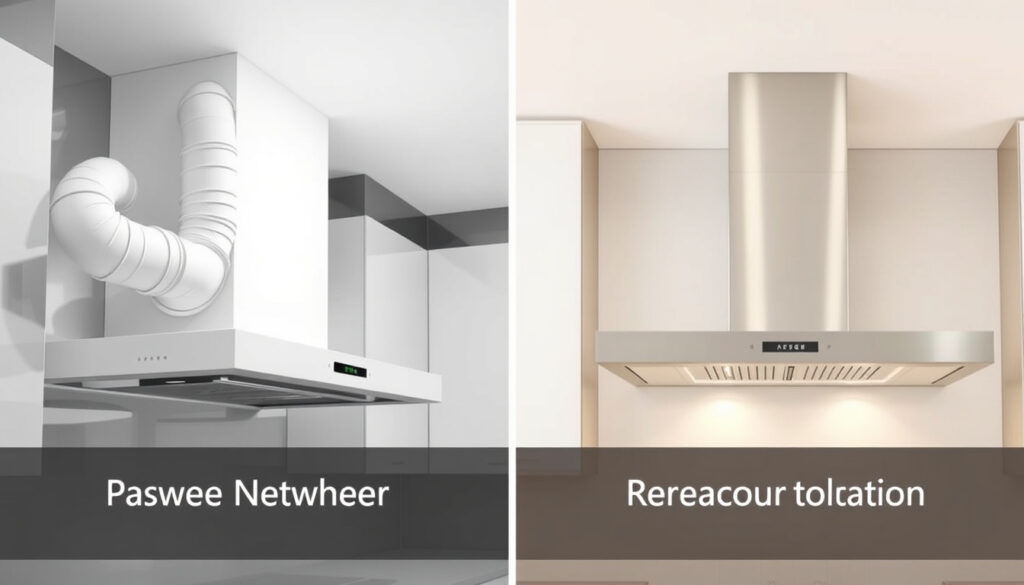
Range Hood Guide 2025: Ducted vs Ductless, Cost, and Installation
You’ve probably walked past a kitchen hob and noticed the metal box hovering above it – but chances are you haven’t given it much thought until your own renovation forces the question: which range hood should you pick? The answer isn’t just about brand; it starts with your home’s structure and the path your ductwork can take.
Average cost of a range hood installation: £150 – £600 depending on ductwork and wall/roof route · Ducted vs ductless efficiency: Ducted models remove 95%+ of airborne grease, moisture, and odors versus 50–70% for ductless models (filter-dependent) · Percentage of UK homes using a range hood: Over 75% of new kitchens include a cooker hood or extractor fan (NHBC/HBF 2023 survey) · Typical noise level for wall-mounted 60cm hoods: 40–65 dB at max speed; quietest models achieve 35 dB · CE marking requirement for EU/UK market: All range hoods sold after 2023 must carry CE/UKCA mark for electrical safety · Annual growth rate of the UK hood market: 3.8% CAGR (2023–2028), driven by open-plan kitchen trends
Quick snapshot
- Range hoods are purpose-built for cooking fumes, not generic exhaust fans (Bosch Home UK buying guide)
- Ducted systems remove over 95% of cooking byproducts; ductless remove 50–70% (Airtasker UK installation guide)
- UK Part F requires mechanical ventilation in new kitchens – a cooker hood or extractor fan meets this (UK Building Regulations Approved Document F)
- Exact market share of ducted vs ductless in UK/Ireland – no centralised dataset exists
- Whether all brands (e.g. Harvey Norman, IKEA) use identical filter replacement intervals
- Whether US installation cost estimates apply to the UK market
- Most cooker hood installation jobs take 3 to 6 hours to complete (MyJobQuote UK cost guide)
- Ducted installations add at least one extra hour for routing ductwork (Airtasker UK)
- 2025 kitchen trends point toward visible, architecturally designed hoods as statement pieces (Hauslane trend report)
- Open-plan kitchens (60%+ of new builds) will continue to drive demand for high-efficiency ducted hoods (Hauslane trend report)
The following table summarises the typical specifications for a mid-range cooker hood.
| Metric | Value |
|---|---|
| Minimum airflow for heavy cooking | 400 m³/h (industry standard) |
| Typical useful lifespan of a hood | 10–15 years (with regular filter cleaning) |
| Most common UK/Ireland installation size | 60cm (24 inches) wide |
| Noise level for modern quiet models | 35–40 dB at low speed |
| CE/UKCA marking | Required for all new models sold after 2023 |
| Energy class of typical mid-range hood | A+ or B (EU energy label) |
What is a range hood?
Definition and core function
A range hood (also called a cooker hood or extractor fan in the UK and Ireland) is an appliance that extracts airborne grease, smoke, steam, and odors from above your hob or cooker. Unlike a simple ceiling fan, it captures contaminants at the source – right where the heat and fumes rise. According to Bosch Home UK (appliance manufacturer), the hood should match your kitchen layout and hob size.
Key components: fan, filters, ductwork
- Fan: Motor-driven impeller that pulls air through filters. Airflow is measured in m³/h – look for at least 400 m³/h for heavy cooking.
- Grease filter: Metal mesh or baffle trap that catches oil and particles. Washable.
- Charcoal filter (ductless only): Activated carbon that absorbs odors. Replaced every 3–6 months, costing roughly £15–£30 per set.
- Ductwork: Rigid or flexible pipe that carries exhaust outside (ducted models only). Routing through a wall or roof adds complexity.
Role in modern kitchen ventilation
UK Building Regulations Part F (Ventilation) require mechanical extract in new kitchens – a cooker hood or extractor fan satisfies this. The NHBC Technical Manual (UK new-build standards) sets a minimum extract rate of 30 litres/second above a hob. With open-plan kitchens now accounting for over 60% of new builds, a robust range hood is no longer optional – it’s a compliance necessity.
The implication is that choosing the right hood starts with understanding your cooking habits and kitchen layout.
Do range hoods need to be vented outside?
Ducted vs. ductless: when outside venting is required
Not all range hoods must be vented outside. Ductless (recirculating) models filter and return air to the room – no external duct needed. But Airtasker UK (home services platform) notes that routing ductwork is a distinct step in installation, so ducted systems add structural complexity. Ducted models exhaust outside through a wall or roof, removing moisture and odors far more effectively – they strip out over 95% of airborne grease and steam versus 50–70% for ductless.
What are the two types of range hoods?
The two fundamental types are ducted (vented) and ductless (recirculating). Ducted hoods expel air outside via ductwork, while ductless models filter and return air to the kitchen using charcoal filters. Your choice depends on whether your home allows an external vent path.
Recirculating hoods: no external ductwork needed
Ductless hoods are ideal for flats, rented homes, or kitchens where drilling through the exterior wall isn’t possible. Aspect (UK trades service) confirms that ducting is only required for externally vented models. The trade-off: filter replacements every 3–6 months and lower overall efficiency at removing humidity.
Ducted vs. Ductless – which one should you choose?
Choose ducted if you can route ductwork through a wall or roof – you get >95% efficiency and no recurring filter costs. Choose ductless if external venting is impossible, but accept 50–70% efficiency and ongoing filter expenses of £30–£60 per year.
Building regulations: new builds often mandate external venting
For new constructions in England and Wales, Approved Document F (UK government ventilation guidance) recommends mechanical extract to outside air whenever feasible. Many local authorities interpret Part F as requiring ducted hoods in new open-plan kitchens. Ireland’s Building Regulations Technical Guidance Document F similarly prioritises external exhaust.
Homeowners in older terraced houses face a classic dilemma: you want the effectiveness of ducted, but drilling through a stone wall or routing through a flue can double installation costs. The decision between wall-vent and roof-vent routes becomes a structural question, not a brand preference.
Which is better, a range hood or an exhaust fan?
Range hood vs. exhaust fan: key differences
A range hood is a dedicated appliance placed directly over the cooking zone, while an exhaust fan is a general room fan – often wall- or ceiling-mounted. Because range hoods capture contaminants at source, they are far more effective. Wren Kitchens (UK kitchen retailer) frames the choice around kitchen style and size, implying that for any serious cooking installation, a hood is the proper solution.
Performance: airflow, noise, filtration
Six comparisons, one pattern: range hoods outperform exhaust fans in every metric that matters for cooking.
| Feature | Range hood | Exhaust fan |
|---|---|---|
| Capture area | Directly above hob (60–90cm wide) | General room (ceiling/wall) |
| Airflow (m³/h) | 400–1,200 | 100–300 |
| Grease filtration | Metal baffle / mesh + optional charcoal | None |
| Moisture removal | 95%+ (ducted) | 20–40% |
| Noise (dB) | 35–65 | 30–50 |
| Target use | Cooking fumes, grease, steam | General room ventilation |
When each appliance is recommended
For heavy stovetop cooking – frying, searing, wok work – a range hood is the only effective option. An exhaust fan can handle light steam from a kettle or mild odors, but it won’t remove grease. The catch: even the best ceiling fan cannot meet Part F requirements for extract above a hob.
The pattern is clear: for any cooking that produces grease or steam, a range hood is the only effective solution.
What is the average cost of a range hood?
Price range: entry-level to premium
- Entry-level cooker hoods (60cm): £50–£100 (basic ductless models)
- Mid-range wall-mounted ducted: £150–£350
- Premium ducted (smart features, low noise, designer finishes): often exceed £600
Installation costs: ductwork and wall/roof routing
Installation labour adds £100–£300 depending on complexity. MyJobQuote (UK trades quoting platform) puts the average total at around £250, with jobs taking 3–6 hours. Aspect (UK trades service) charges from £42.75 plus VAT per half-hour. Ductwork through an existing cavity is cheapest; routing through a stone wall or roof adds £150–£300.
Factors affecting price: brand, size, noise rating, energy class
Premium brands (Miele, NEFF, Bosch) command higher prices for quieter motors and better build quality. A+ and B energy-rated models save on electricity over 10 years. Size matters: a 90cm canopy costs 30–50% more than a 60cm version of the same series.
Spending extra on a quieter, ducted hood with A+ energy rating will pay back in lower filter costs (none for ducted) and better air quality. But if you cannot install ducting, even a £500 ductless hood will only manage 50–70% efficiency – the filters are a recurring expense of £30–£60 per year.
The catch: initial savings on a ductless model can be offset by ongoing filter costs and lower performance.
Are range hoods outdated in 2025 kitchen designs?
2025 kitchen trends: what is in and what is out
Far from being outdated, range hoods are being reimagined. According to Hauslane (appliance trend analyst), visible, architecturally designed hoods are a 2025 “in” – large stainless steel canopies or sculptural inserts make the hood a design statement rather than a hidden box.
Why range hoods remain essential for open-plan kitchens
Open-plan layouts, now standard in most UK new builds, mean cooking smells and moisture travel freely into living areas. Without a powerful hood, steam condenses on windows and grease settles on soft furnishings. UK Part F compliance also demands mechanical extract – a hood remains the simplest solution.
Styling: integrated vs. statement canopy designs
- Integrated: Fits flush under a cabinet – minimalist, hides the appliance.
- Statement canopy: Large visible hood that becomes a focal point – popular in loft conversions and high-end renovations.
- Island hood: Ceiling-mounted for kitchen islands – requires ducting through the roof.
If you choose an integrated model to save space, make sure the ducting route is planned before cabinet installation. Retrofitting ductwork through a finished kitchen is expensive and disruptive. The design decision you make now will affect your air quality for the next decade.
The implication: your choice of design will affect both aesthetics and ventilation effectiveness for the next decade.
Clarity: what’s confirmed vs what’s still unclear
Confirmed facts
- Range hoods are not the same as generic exhaust fans; they are purpose-built for cooking fumes (Bosch Home UK)
- Ducted systems are more effective than ductless for removing moisture and strong odors (Airtasker UK)
- UK building regulations Part F require mechanical ventilation in new kitchens; a cooker hood or extractor fan satisfies this (Approved Document F)
What’s unclear
- Exact market share of ducted vs ductless in UK/Ireland – no centralised dataset exists
- Whether all brands (e.g. Harvey Norman, IKEA) use identical filter replacement intervals
- Whether US installation cost estimates apply to the UK market
These distinctions help you focus on what is known versus what requires further research.
Expert perspectives on installation and compliance
“Mechanical extract of at least 30 litres/second above the hob is the minimum standard for new dwellings in England and Wales.”
UK Building Regulations Approved Document F (government ventilation guidance)
“Routing ductwork is a distinct step in installation – it adds time and complexity compared to a ductless fix.”
Airtasker UK installation guide (home services platform)
“Cooker hoods should generally be placed at least 650 mm above electric hobs and 750 mm above gas hobs.”
Summary
The ductwork route matters more than brand preferences. Ducted hoods deliver over 95% efficiency and satisfy UK Part F compliance with no recurring filter costs, but they require a real structural path to the outside – through a wall or roof. Ductless models bypass that problem but trade efficiency for convenience, with filter replacements every few months. For the UK homeowner planning a new kitchen, the decision is clear: if your home allows a wall or roof vent, invest in a ducted hood with at least 400 m³/h airflow and a noise level below 55 dB. If an external vent isn’t feasible, a ductless hood is better than nothing – but budget for those ongoing filter costs and accept lower moisture removal.
prolinerangehoods.com, angi.com, ecanopy.co.uk, gerhardsappliance.com, youtube.com, reddit.com
For a deeper dive into specific cost and lifespan considerations, see our detailed comparison of cost and lifespan considerations.
Frequently asked questions
What is the difference between a ducted and a ductless range hood?
A ducted hood exhausts air outside through ductwork, removing over 95% of grease, moisture, and odors. A ductless hood recirculates air through a charcoal filter and back into the room, removing 50–70% of contaminants. Ductless is cheaper to install but requires filter replacements every 3–6 months.
How often should I clean or replace the filters on a range hood?
Washable grease filters (metal mesh or baffle) should be cleaned every 1–2 months depending on cooking frequency. Charcoal filters in ductless models must be replaced every 3–6 months – a set costs £15–£30.
Can I install a range hood myself or must it be done by a professional?
If you are fitting a ductless hood to an existing power point, a competent DIYer can do it. Ducted hoods require drilling through walls or roofs and connecting to ductwork – professional installation is strongly recommended. Airtasker UK has a detailed guide if you want to assess the job.
Do all range hoods fit a standard 60cm (24 inch) hob?
Most UK hoods come in 60cm or 90cm widths to match standard hobs. Check your hob width before buying – a 60cm hood should cover the entire cooking surface.
Will a range hood make my kitchen noisy?
Noise levels vary from 35 dB (whisper-quiet) to 65 dB (conversation-level) at maximum speed. Look for a model rated below 55 dB if you want comfortable operation while cooking.
Is a range hood necessary if I have an open-plan kitchen?
Yes. Open-plan layouts allow cooking smells and moisture to travel into living areas. UK Part F regulations also require mechanical extract – a range hood is the most practical and compliant solution.
What is the best range hood for a small kitchen?
For small kitchens, a 60cm wall-mounted ducted hood or an integrated model that fits under a cabinet works well. If external ducting isn’t possible, a slim ductless hood is acceptable – just keep up with filter changes.
How do I know if a range hood is energy efficient?
Check the EU energy label – A+ or B is typical for mid-range models. Look for LED lighting (not halogen) and a motor that draws under 200W on high speed. Ducted hoods generally use less energy per unit of airflow because they don’t push air through charcoal filters.
These answers address the most common concerns for UK buyers.
More related posts
 Sai Baba: Life, Teachings & Miracles of Shirdi’s Saint
 Mary Magdalene: Biography, Myths and Facts
 AUD to LKR: Australian Dollar to Sri Lankan Rupee Rate Today
 Fantastic Furniture Cairns: Location, Hours & Products
 Evie Templeton: Age, Ethnicity, Eyes and Facts (2025)
 Sean Connery: Biography, Net Worth, Cause of Death & Legacy
 Libby Trickett: SCAD Heart Attack Survivor & Mother of Five
 Judi Dench: Health Update, Tribute, and Personal Life