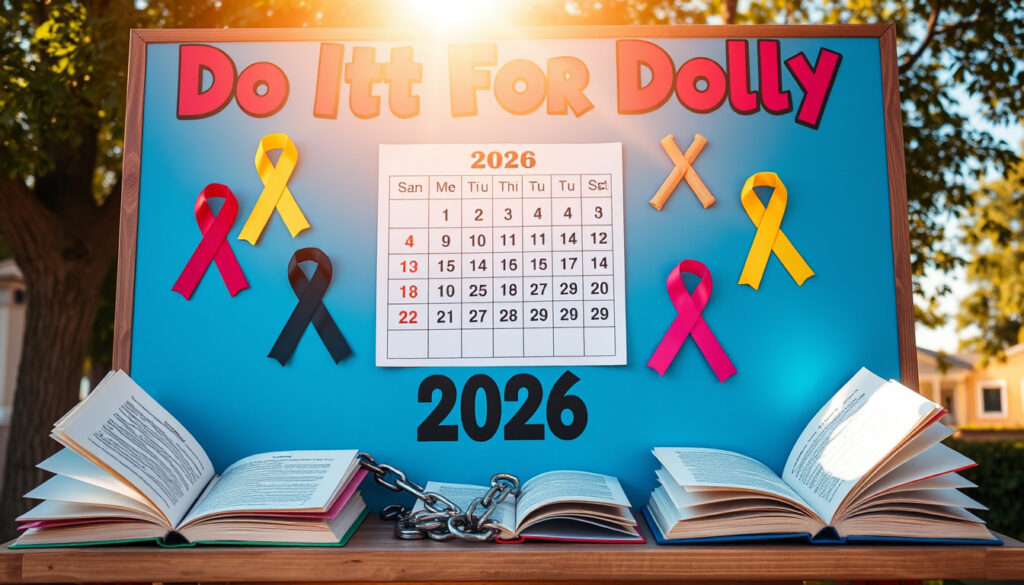
Do It for Dolly: 2026 Date, Story & Anti-Bullying Campaign
Every May, thousands of Australians slip on something blue—not for a holiday or a sports team, but to honour a teenager whose short life sparked a national reckoning with bullying. Do It For Dolly Day turns grief into action, and on May 8, 2026, the movement enters its eighth year with a $2.3 million fundraising goal focused on reaching young people in regional Australia who often slip through the cracks.
Event Date 2026: May 8 · Dolly Everett Birth: May 1, 2003 · Dolly Everett Death: January 3, 2018 · Age at Death: 14 · Theme Color: Blue
Quick snapshot
- Do It For Dolly Day 2026 is on Friday, May 8, 2026 (Dolly’s Dream Official Support Site)
- Dolly Everett was 14 when she died by suicide in January 2018 (Dolly’s Dream Official Support Site)
- The 2026 campaign sets a $2.3 million fundraising goal (Dolly’s Dream Official Media Page)
- Whether the 2026 creative campaign will mirror 2025’s regional film approach or introduce new elements
- Exact participation numbers from schools, workplaces, and communities for 2026
- 2018: Dolly’s Dream founded by Kate and Tick Everett after their daughter’s death
- 2019: First Do It For Dolly Day observed
- 2025: Campaign filmed in Bairnsdale, Victoria; held May 9
- 2026: Eighth annual event, May 8
- Schools, workplaces, and sports clubs across Australia prepare blue-themed activities
- Fundraising drives channel money toward regional support services and anti-bullying workshops
The key facts below provide essential reference points about Dolly Everett and the campaign she inspired.
| Field | Detail |
|---|---|
| Full Name | Amy Jayne Everett |
| Nickname | Dolly |
| Birth Date | May 1, 2003 |
| Death Date | January 3, 2018 |
| Cause | Suicide due to bullying |
| Foundation | Dolly’s Dream |
What does “do it for dolly” mean?
The phrase “Do It For Dolly” functions as both a rallying cry and a national day of action. It asks Australians to channel empathy into concrete gestures—wearing blue, speaking kindly, checking in on someone who seems isolated. The movement was born from tragedy but has evolved into something proactive: a yearly reminder that kindness is a choice, and bullying is not a rite of passage.
Campaign origins
Kate and Tick Everett, parents from the Northern Territory, founded Dolly’s Dream in 2018 after losing their daughter Amy Jayne “Dolly” Everett to suicide at age 14 (Dolly’s Dream Official Media Page). The organisation operates under the umbrella of the Alannah & Madeline Foundation, a well-established Australian child safety charity (Play & Go Adelaide). What started as a personal memorial became a nationwide anti-bullying infrastructure, complete with school workshops, a 24-hour support line, and annual awareness events.
Core message of kindness
The campaign tagline—Go Blue to End Bullying—ties directly to Dolly’s favourite colour, making the visual language personal rather than arbitrary (Dolly’s Dream Official Media Page). Before her death, Dolly created artwork bearing the phrase “Speak, even if your voice shakes” (Marketing Magazine Australia). That message now appears on merchandise, posters, and social media posts—a direct invitation for young people to ask for help even when it feels terrifying.
The silence around bullying is itself a crisis: over one quarter of Australian school children will be bullied in a given year, and one in seven victims stays silent, never telling anyone (Marketing Magazine Australia). The campaign targets that silence directly.
What is the story of Dolly Everett?
Understanding Do It For Dolly Day requires understanding who Dolly was—not as a symbol, but as a teenager whose life intersected with the brutal realities many young Australians face. Amy Jayne Everett was born May 1, 2003, in the Northern Territory. She was known to friends and family as Dolly—a nickname that would eventually become the face of one of Australia’s most recognisable anti-bullying campaigns.
Early life and bullying
Dolly experienced relentless bullying and cyberbullying throughout her early teens. Her parents have spoken publicly about how the harassment escalated, eventually overwhelming a 14-year-old who had nowhere safe to turn. Dolly’s Dream was established precisely because Kate and Tick Everett refused to let other families face the same silence they couldn’t break in time (Dolly’s Dream Official Support Site).
Tragic outcome
Dolly died by suicide on January 3, 2018, at age 14. Her death sent shockwaves through Australian communities and forced a broader conversation about the intersection of bullying, mental health, and the inadequacy of support systems available to teenagers. The tragedy became the catalyst for Dolly’s Dream and, subsequently, Do It For Dolly Day.
The campaign does not ask Australians to feel sad on Do It For Dolly Day. It asks them to act. The shift from memorial to movement is the Everett family’s way of ensuring Dolly’s death means something beyond grief.
What day is Do It for Dolly 2026?
Do It For Dolly Day 2026 falls on Friday, May 8, 2026. This date was confirmed directly on Dolly’s Dream’s official support site (Dolly’s Dream Official Support Site), making it the eighth consecutive year of the campaign. The event occurs annually in early May, close to both Dolly’s birthday (May 1) and the month that follows her death (January).
Official date
Note that 2025’s event was held on May 9, which occasionally creates confusion online. The official schedule confirms May 8 as the permanent date for 2026 and beyond, barring any unforeseen scheduling adjustments. Schools and workplaces planning activities should anchor their preparations to early May and verify dates closer to the event through Dolly’s Dream Official Support Site.
Date discrepancies
Some secondary sources or older posts may reference May 9 based on the 2025 date, which can create confusion when searching for current information. The Everett family’s official organisation consistently publishes the correct upcoming date on its website and social channels.
Who is Dolly in Do It For Dolly?
Dolly is Amy Jayne Everett (2003–2018), a teenager from the Northern Territory whose death by suicide after experiencing relentless bullying became the impetus for a national movement. She was known as Dolly to her family and friends—a nickname that stuck and now represents something larger than one individual. The question “who is Dolly in Do It For Dolly” is answered not just by her biography, but by what her story has become.
Personal background
Dolly grew up in regional Australia, where access to mental health support and anti-bullying resources has historically been limited. Her family’s decision to speak openly about her death was unusual for the time—there was (and still is) significant stigma around youth suicide. By sharing their grief publicly, Kate and Tick Everett chose to weaponise their pain against the systems that failed their daughter.
Legacy through Dolly’s Dream
Dolly’s Dream, the organisation founded in her name, now implements anti-bullying workshops in schools across Australia, operates a 24-hour counselling support line called 13 DOLLY (reachable at 13 DOLLY), and coordinates the annual Do It For Dolly Day (Marketing Magazine Australia). The foundation prioritises regional and remote communities where young people often feel more isolated and less able to access help (Dolly’s Dream Official Support Site). The 2025 campaign was filmed in Bairnsdale, Victoria—a regional town chosen deliberately to highlight these disparities (LBB Online).
The implication is clear: without intervention, regional youth will continue to face systemic gaps in support that urban centres rarely experience.
What is the Do it for Dolly Day 2026 theme?
The 2026 campaign continues the Go Blue to End Bullying theme, tying the visual identity to Dolly’s favourite colour. The colour is not decorative—it is a signal, a conversation starter, and a badge of solidarity that makes participation simple and visible. What varies year to year is the campaign’s geographic and storytelling focus.
Go Blue initiative
Wearing blue is the simplest form of participation. Schools encourage students to don blue clothing or accessories on May 8, often alongside educational activities about kindness and bystander intervention. Workplaces participate by decorating common areas in blue, sharing campaign messages internally, or organising fundraising events. Sports clubs—particularly junior leagues—have become significant participants, using the platform to address team culture and the role of peer behaviour in bullying.
Participation ideas
Participating in Do It For Dolly Day does not require a large budget or elaborate planning. Simple actions include wearing blue and posting on social media with #DoItForDolly or #GoBlue, donating directly to Dolly’s Dream, organising a “kindness challenge” within a classroom or team, or simply checking in on a young person who seems withdrawn. The campaign’s website provides downloadable resources for teachers and community coordinators.
Fundraising options include selling blue-themed merchandise, hosting morning teas, or directing workplace giving programs toward Dolly’s Dream. The $2.3 million 2026 fundraising goal reflects an ambition to expand services in regional Australia, where professional support can be hours away (Dolly’s Dream Official Media Page).
Timeline
The timeline below traces Dolly’s life and the evolution of the anti-bullying movement she inspired.
| Date | Event |
|---|---|
| May 1, 2003 | Dolly Everett born |
| 2017 | Bullying intensifies |
| January 3, 2018 | Dolly dies by suicide |
| 2018 | Dolly’s Dream founded by Kate and Tick Everett |
| 2019 | First Do It For Dolly Day observed |
| 2025 | Campaign focuses on regional Australia; filmed in Bairnsdale, Victoria |
| May 8, 2026 | Next Do It For Dolly Day — eighth annual event |
Expert perspectives
Dolly’s Dream has quoted Kate Everett speaking about the campaign’s purpose: she has called for a cultural shift in how young people treat each other, arguing that kindness is not a soft skill but a form of prevention. The organization’s Youth Mental Health First Aid training programs, delivered through Dolly’s Dream, equip community members to recognise warning signs and intervene appropriately (Dolly’s Dream Official Support Site).
“We don’t want sympathy. We want action. Every person who wears blue on May 8 is making a promise: I will not be part of the problem.”
— Kate Everett, Co-founder, Dolly’s Dream
“Speak, even if your voice shakes.”
— Dolly Everett, from artwork created shortly before her death
What this means: the Everetts have reframed grief as a form of activism, transforming personal loss into a national mandate for cultural change.
Related reading: kids activities near me · Sporting Club Sydney membership
onlymelbourne.com.au, support.dollysdream.org.au, antibullyingcrusader.com
Complementing Do It for Dolly’s mission, global initiatives like Pink Shirt Day 2025 promote widespread action against bullying on key annual dates.
Frequently asked questions
What day is Do It for Dolly 2026?
Do It For Dolly Day 2026 takes place on Friday, May 8, 2026. This is confirmed on Dolly’s Dream’s official support site. The event occurs annually in early May.
How can I participate in Do It for Dolly?
Participation options include wearing blue clothing, posting on social media with campaign hashtags, organising fundraising activities at schools or workplaces, donating directly to Dolly’s Dream, or simply checking in on a young person who may be struggling.
Where to buy Do It For Dolly merchandise?
Official Dolly’s Dream merchandise is available through the organisation’s website. Proceeds support anti-bullying programs, the 13 DOLLY support line, and regional outreach initiatives.
What is Dolly’s Dream organization?
Dolly’s Dream is an Australian anti-bullying foundation founded in 2018 by Kate and Tick Everett following the death of their daughter Amy Jayne “Dolly” Everett at age 14. It operates under the Alannah & Madeline Foundation and delivers workshops, support services, and the annual Do It For Dolly Day campaign.
Why wear blue for Do It for Dolly?
Blue was Dolly Everett’s favourite colour. The campaign’s tagline—Go Blue to End Bullying—transforms a personal preference into a symbol of solidarity and awareness.
How old would Dolly Everett be today?
Dolly Everett was born May 1, 2003. If she were alive in 2026, she would turn 23 that May.
What is the Do It for Dolly campaign goal?
The 2026 campaign aims to raise $2.3 million to fund regional outreach, anti-bullying workshops in schools, the 13 DOLLY support line, and Youth Mental Health First Aid training programs. The Everett family’s ultimate goal is to prevent other families from experiencing the loss they endured.
For Australian schools, workplaces, and communities, the message of Do It For Dolly Day is straightforward: bullying is not inevitable, and kindness is not naive. One teenager’s tragedy became a national call to arms—not with anger, but with blue ribbons and the simple promise to do better.
More related posts
 One Piece Characters: Main Crew, Relationships & FAQs
 English to Croatian – Best Free Tools 2025
 Thierry Henry: Biography, Stats, Net Worth & Career Achievements
 Colin Farrell: Personal Life, Career, and 2025 Updates
 Madylin Sweeten: Life After Raymond, Baby and More
 Bernard Hill: Titanic and Lord of the Rings Star Dies at 79
 Gwendoline Christie Biography: From Game of Thrones to Severance
 John Bishop: Family, Deaf Son, and Bradley Cooper Biopic